
Wood-burning or Pellet Stove? Differences, Costs and How to Choose + 7 Best-Selling Models
-
29 August, 2026
Table of Contents
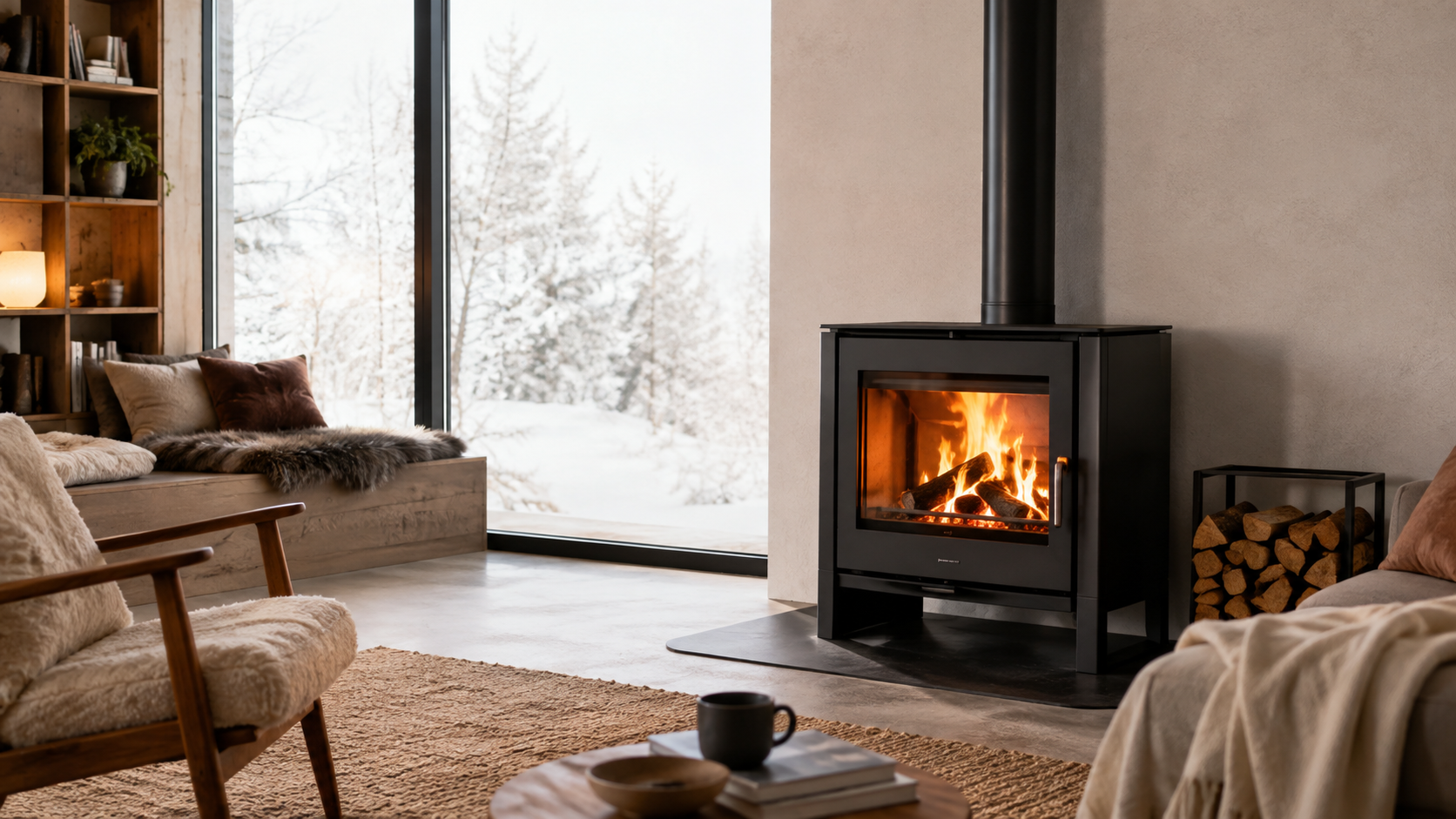
If you're thinking of complementing or replacing your traditional heating system, sooner or later the question comes up: is a wood-burning or pellet stove better? Both use wood biomass, both can provide pleasant warmth and help reduce the use of other heating systems. Yet in everyday use, they are very different.
Wood appeals to those who love fire in its most authentic form; pellet, on the other hand, focuses on convenience, programming and temperature control. So there is no absolute winner: there is the one that best suits your home, your habits and, not exactly a minor detail, your willingness to load logs at seven in the morning.
Let's look at the differences, consumption, costs, advantages and disadvantages of wood-burning and pellet stoves to understand which one to choose.

Wood-burning stove and pellet stove: how do they work?
Let's start with the most obvious difference: the fuel.
The wood-burning stove uses logs that are manually loaded into the combustion chamber. Once the fire is lit, heat is distributed into the room mainly by radiation and natural convection, although there are ventilated models or models that can be connected to the heating system.
The pellet stove, on the other hand, uses small cylinders of compressed wood stored in a hopper. An auger automatically doses the fuel into the burn pot, while the electronics manage ignition, temperature and power.
What does that mean in real life? With wood, you have a much more direct relationship with the fire. With a pellet stove, you can often press a button and carry on with something else.

Pellet stove: why choose one?
The main advantage of a pellet stove is convenience. The hopper can store enough fuel for several hours of operation, and many models can be programmed according to the times of day.
You can therefore set ignition, switch-off and temperature without having to constantly feed the fire. More advanced models may also include remote controls, Wi-Fi and app control.
Combustion control is also more precise: the electronics automatically adjust the pellet and air supply according to the required power. In general, pellet stoves achieve high efficiency levels; this technology generally reaches higher values than traditional wood-burning stoves in the same power range.

The main advantages therefore include:
- automatic and programmable operation;
- high efficiency;
- easier maintenance of a constant temperature;
- compact, easy-to-dose fuel;
- greater autonomy than wood;
- the possibility, on some models, of heating several rooms.
The downside? Fans, the auger and electronics need electricity and can produce a slight noise during operation.

Wood-burning stove: the charm of fire, and more
Reducing a wood-burning stove to a purely romantic choice would be unfair. Of course, watching logs burn has a charm that an auger will probably never be able to replicate, but there are also some very practical advantages.
A traditional wood-burning stove can operate without an electricity supply, a useful feature especially in isolated homes or areas subject to power cuts. Its mechanical structure is also generally simpler than that of a pellet stove.
Wood can be particularly cost-effective if you have access to a local supply chain, can buy it in quantity or have your own timber.
The main advantages are:
- possible operation without electricity;
- relatively simple mechanics;
- intense, pleasant heat;
- a distinctive atmosphere;
- the possibility of buying fuel from local suppliers;
- fewer electronic components.
Naturally, it requires more involvement: you have to light the fire, feed it and learn how to manage combustion correctly. In short, it is not exactly a system for the lazy.

Wood-burning stove or pellet stove: which heats more?
It is one of the most frequently asked questions, but the correct answer is: it depends on the stove's power and the space to be heated, not simply on the fuel.
A 10 kW stove does not become more powerful just because it burns wood instead of pellets. The difference mainly lies in how that power is managed.
A pellet stove offers more precise control: once the set temperature is reached, it can automatically modulate combustion, reducing fuel consumption.
With wood, regulation is more manual. The quantity and quality of the logs, moisture, draught and air supply have a greater influence on how the fire burns.
For both, it is therefore essential to choose a power output suited to the square metres to be heated, taking into account the building's insulation, climate zone, ceiling height and room layout. As a general guide, in a home with average insulation, you can consider approximately 80-100 W of power per square metre: a 6 kW stove may be suitable for around 40-60 m², an 8 kW stove for 60-80 m² and a 10 kW stove for around 80-100 m². These are still indicative values and should be checked against the actual characteristics of the home.
An oversized stove is not necessarily better: it simply risks turning your living room into a branch of the Tropics.

How much does a wood-burning or pellet stove cost?
When talking about wood-burning and pellet stove costs, at least three items need to be considered separately: purchase, installation and fuel.
A traditional wood-burning stove generally has a less complex structure and may have a lower initial price than an equivalent pellet model. Design, materials, finishes, power and technology can, however, make the price vary considerably.
Pellet stoves, on the other hand, incorporate a hopper, auger, electronic board, ventilation systems and automatic controls. This can mean a higher initial investment, especially when choosing ducted, hydro or smart-function models.
The price of the appliance must then be supplemented by professional installation, connection to the flue and any necessary adaptation work.
It is therefore worth comparing the total cost of the system, not just the stove's price tag. An inexpensive stove that requires major work can quickly become much less economical.
To get an idea, browse our catalogue now: we have sorted the prices in ascending order:

Pellet or wood: which costs less?
Here the answer becomes more complicated, because the price depends on the season, geographical area, quantity purchased and fuel quality.
Firewood can be very cost-effective when purchased locally, especially in large quantities. It does, however, require space: it must be stored in a dry, ventilated and sufficiently large area.
Pellets take up less volume and are normally sold in bags, so they are easier to transport, stack and dose. Their price, however, is more closely linked to market dynamics.
Also pay attention to quality: buying fuel simply because it is cheap can be a false economy. Poor-quality pellet or excessively damp wood can worsen combustion, efficiency and appliance cleanliness.

Space and storage: a detail that is anything but minor
Before choosing between a wood-burning stove and a pellet stove, look at where you will store the fuel.
Pellets are relatively easy to manage: the bags can be stacked and take up a predictable amount of space. In addition, thanks to their low moisture content and higher energy density than other wood biomasses, they generally require a smaller storage volume.
Wood is definitely more demanding. You need a dry, ventilated space, preferably sheltered from precipitation and large enough to allow you to buy a good supply.
Do you have a garage, woodshed or storage room? Great. Do you live in a flat and the only free space is half a balcony already taken up by the drying rack? Well, there you have it.
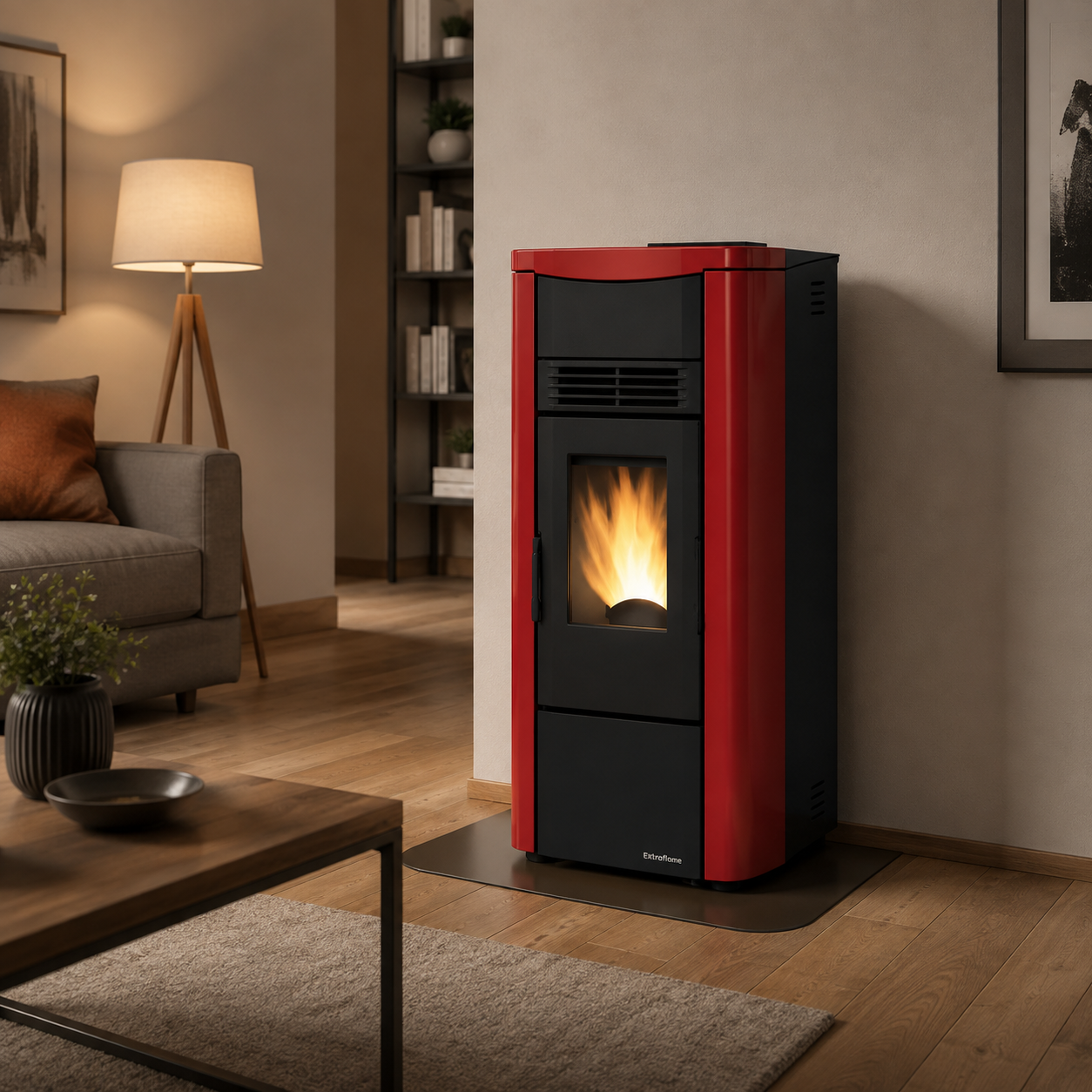
Cleaning and maintenance: which requires more work?
Both stoves require maintenance. The difference mainly lies in the type of work involved.
With a wood-burning stove you will need to remove ash, clean the glass periodically and keep the combustion chamber efficient. It is also essential to use well-seasoned wood: burning excessively damp material worsens combustion and encourages residue build-up.
A pellet stove also requires frequent cleaning of the burn pot, ash drawer and glass. Routine maintenance is important to maintain correct airflow and good efficiency over time.
In addition, a pellet stove contains mechanical and electronic components that may require specific technical servicing.

Eva Calòr majolica pellet stove DIANA, 12.5 kW, heats up to 300 m³, 25 kg hopper, 5 stars, A+ energy class, Made in Italy, cream
Noise, electricity and comfort: the differences in everyday use
The choice between a pellet stove and a wood-burning stove also changes the everyday experience.
A traditional wood-burning stove is practically silent: you will hear the crackle of the fire and little else.
Pellet stoves, on the other hand, involve fans, auger and flue-gas extraction systems. Modern models can be very quiet, but some mechanical noise may still be noticeable, especially in quiet rooms.
Then there is the electricity issue. A pellet stove normally needs electricity to operate: without power, the electronics, auger and fans do not work.
A natural-convection wood-burning stove, on the other hand, can continue to operate even during a power cut.
If you live in an area where power cuts are frequent, this detail deserves more attention than it may seem.
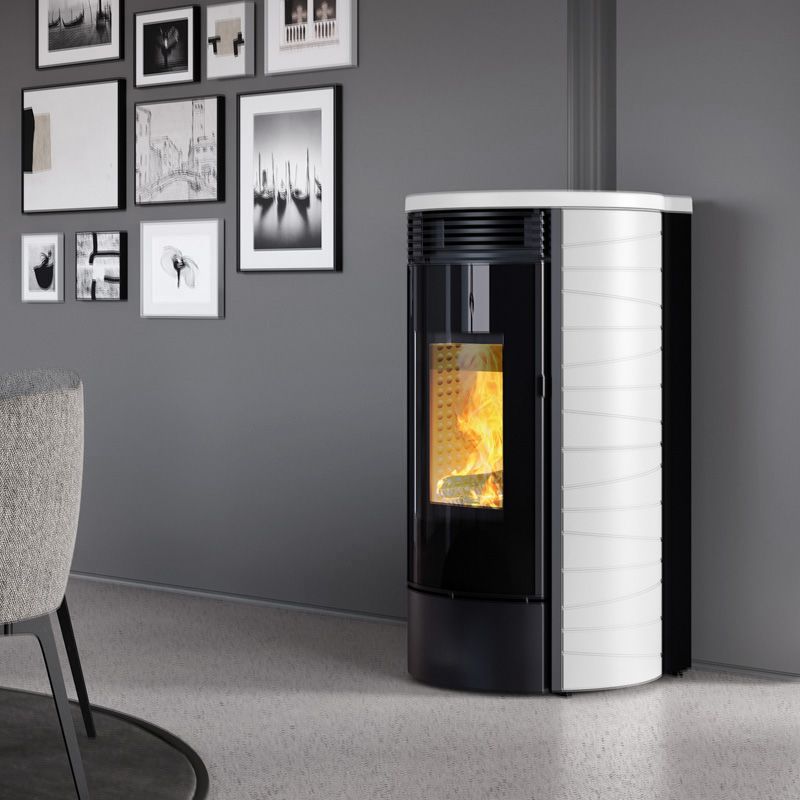
Wood or pellet: which is more eco-friendly?
Both are wood-derived fuels, but the environmental impact depends heavily on the quality of the fuel, the efficiency of the stove and the way it is used.
An old stove used incorrectly can have very different emissions from a modern appliance designed according to the latest standards.
For this reason, it is important to choose efficient appliances and use quality fuel. For pellet, it is advisable to check the relevant certifications; for wood, origin, moisture content and quality also matter.
Correct management of wood combustion helps both to reduce emissions and to use the fuel more efficiently.
Before purchasing, it is also advisable to check any regional or local regulations on emissions and the installation of biomass generators, because requirements can vary depending on the area.

Wood-burning or pellet stove: what to consider before buying
Before deciding, consider above all:
- the size and insulation of the home;
- the required power output;
- the presence and characteristics of the flue;
- available space for fuel;
- the local cost of wood and pellets;
- frequency of use;
- the need to programme the heating;
- your willingness to manage the fire manually;
- any local regulations.
The best product is not necessarily the one with the most features: it is the one that fits best into your everyday life. And if you still have doubts, it is always better to discuss them with your trusted technician.
7 Best-Selling Made in Italy Stoves: You Won't Want to Be Without Them
1. Eva Calòr NORA Airtight Pellet Stove
The Eva Calòr Nora pellet stove combines compact dimensions, Made in Italy design and high performance to efficiently heat rooms up to 160 m³. The airtight structure draws combustion air from outside, while its power output of up to 6.5 kW, the 13.5 kg hopper and A+ energy class make it a practical solution for anyone looking for comfort and well-managed consumption. The red finish adds a bold touch to the room, but it is also available in white and black.

2. Eva Calòr KALI Pellet Stove
The Eva Calòr Kali pellet stove is an interesting solution for anyone who wants good heating without facing excessive expense. With 8 kW of power, it can heat rooms up to 200 m³, offers an A+ energy class, 5-star environmental certification and an 11 kg hopper. Compact and Made in Italy, it focuses on an excellent balance of price, performance and consumption: a practical choice for anyone looking for an affordable yet efficient pellet stove, without giving up useful features such as Wi-Fi readiness. In short: small but powerful.

3. Eva Calòr LUCILLA Pellet Stove
The Eva Calòr Lucilla pellet stove is designed for anyone who wants to heat the home without giving up on aesthetics. Its steel cladding with decorative inlays gives it a more refined look than classic technical stoves, making it suitable for carefully furnished living rooms and modern interiors too. With 8 kW of power, it heats up to 200 m³, offers an A+ energy class, 5-star environmental certification and a 13.5 kg hopper. An efficient, elegant, Made in Italy pellet stove that does its job without looking as though it was put there purely out of necessity. Also available with red or black inlays.

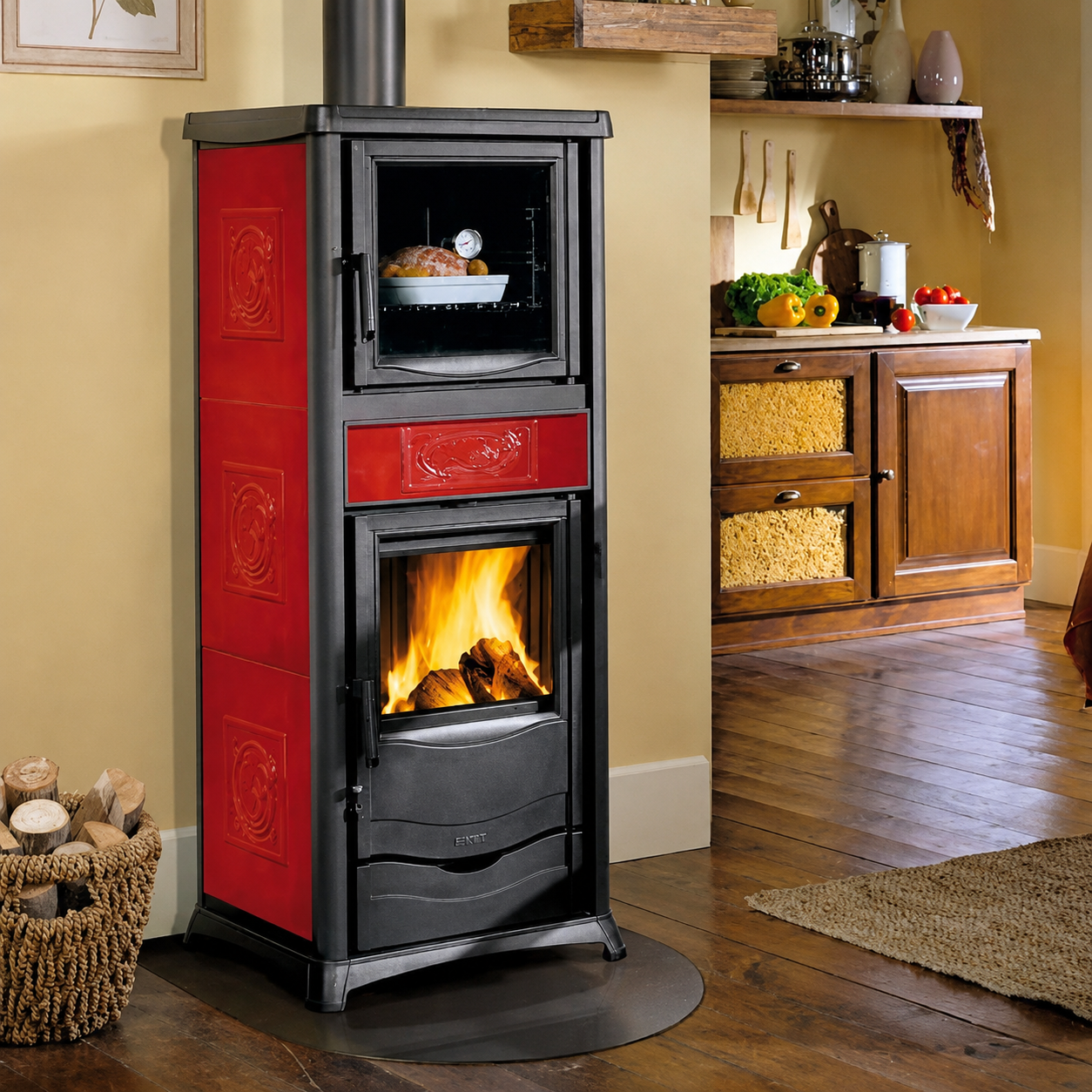
4. Eva Calòr ROSSELLA Wood-Burning Stove
The Nordica Rossella Plus Forno.165 Ceramica wood-burning stove is the ideal choice for anyone looking for warmth, atmosphere and an extra function to use every day. With 9.4 kW of power it can heat up to 270 m³, while the integrated 37-litre oven lets you combine heating and traditional cooking in a single product. The bordeaux majolica cladding, combined with enamelled cast-iron elements, gives it a classic, substantial look, perfect for rustic or traditionally styled interiors.
In addition, it offers an A+ energy class, 5-star environmental certification and a practical log drawer: beautiful to look at, practical to use and decidedly more versatile than a simple stove. In short, you can tell from the name alone that it feels right at home.
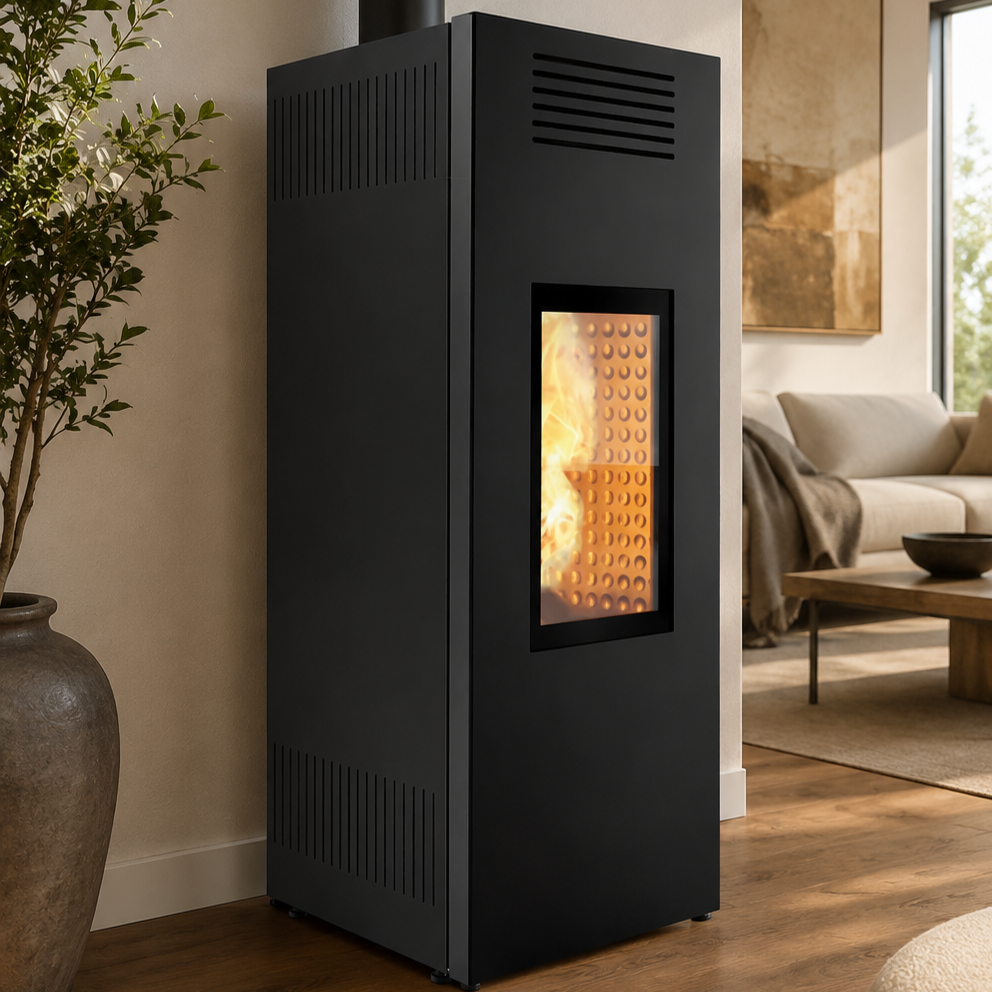
5. Caminetti Montegrappa LH11V NOIR XW Ventilated Hot-Air Wood-Burning Stove
The Caminetti Montegrappa Noir XW LH11V wood-burning stove focuses on power, comfort and a clean contemporary aesthetic. With 11 kW of total heat output, an efficiency of 85.1% and the ability to heat rooms up to 108 m², it delivers effective, well-distributed heat thanks to adjustable ventilation. The painted-steel structure, cast-iron combustion chamber and large panoramic glass showcase the flame, turning it into part of the décor. A solid, high-performance ventilated wood-burning stove designed for those who love a traditional fire but do not want to give up more even heat distribution.
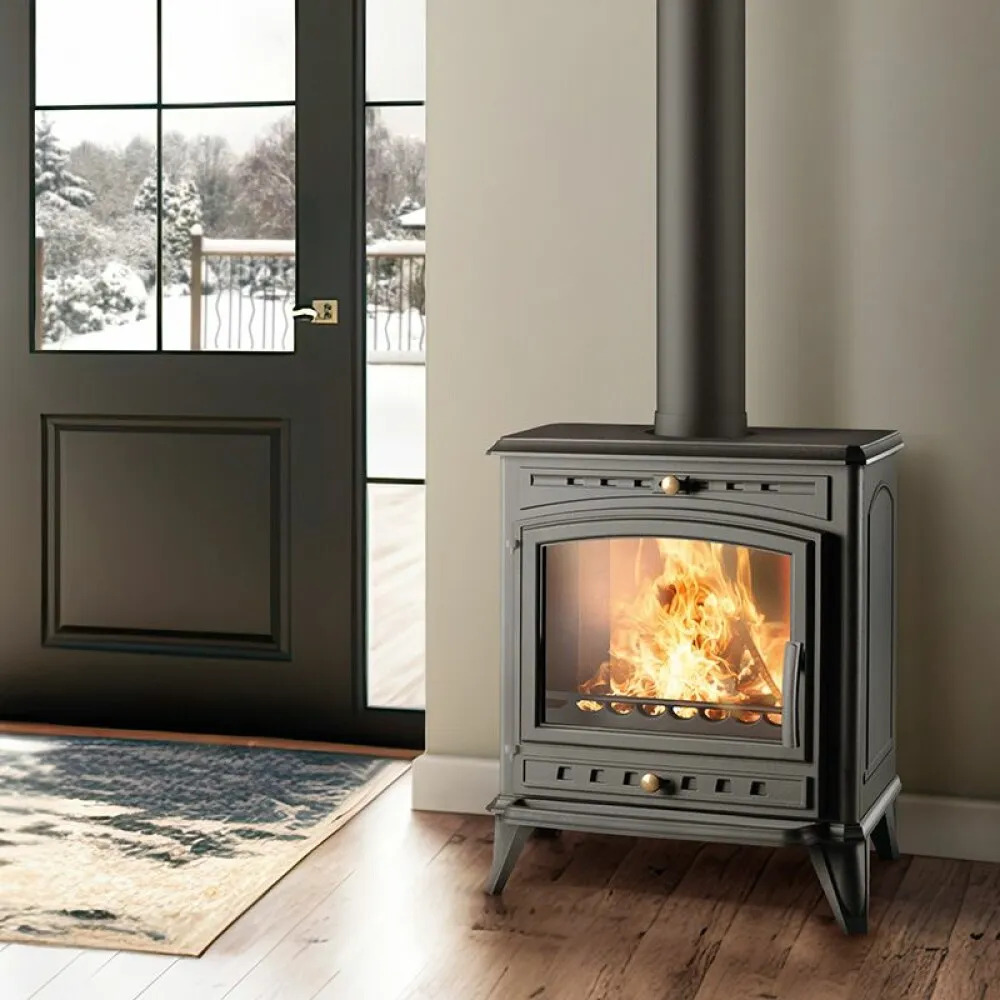
6. Caminetti Montegrappa CLAUDINE Wood-Burning Stove
The Caminetti Montegrappa Claudine wood-burning stove makes an impression before it even starts heating: the large front glass door offers a wide panoramic view of the flame, turning the fire into a true furnishing feature. The anthracite-grey cast-iron structure gives it a solid, elegant character, while natural convection ensures even, quiet heat without forced ventilation. With a power output of around 10.1 kW and a heatable area of up to 92 m², it combines visual presence and functionality. A stove designed for anyone who wants to heat the room, yes, but also enjoy the fire as part of the show.
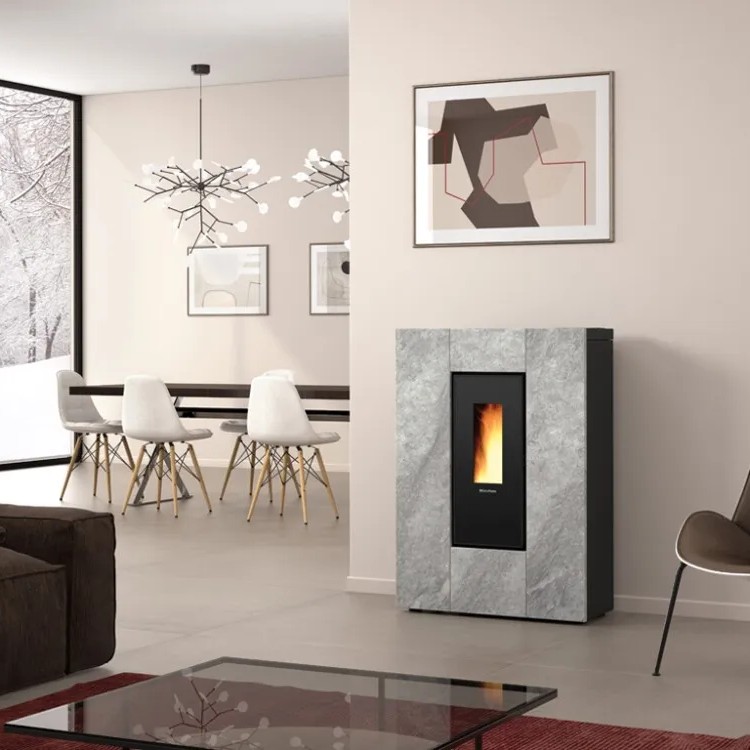
7. Extraflame Nordica MARILENA PLUS PETRA 5.0 AD Pellet Stove
The Extraflame Nordica Marilena Plus Petra 5.0 AD pellet stove combines performance, design and versatility in a slim format just 35 cm deep, ideal even when space is limited. With 8 kW of power it can heat up to 230 m³, while the ducting system up to 8 metres, which can be adjusted or switched off, lets you distribute heat to other rooms as well.
The real eye-catcher, however, is the natural stone cladding, elegant and tactile, which turns the stove into a genuine furnishing feature. Completing the package are top ventilation with comfort function, double ceramic glass and a wide view of the flame: a solution designed for anyone who wants to heat several spaces without putting aesthetics aside.
FAQ: frequently asked questions about wood-burning and pellet stoves
Is a wood-burning stove or a pellet stove better?
It depends on your needs. A pellet stove offers greater automation, programming and temperature control; a wood-burning stove is simpler, quieter and can operate without electricity.
Which uses less fuel, a wood-burning stove or a pellet stove?
There is no absolute answer. Consumption and cost depend on stove efficiency, power output, home insulation, hours of use and fuel price.
Which stove is more efficient?
In general, modern pellet stoves achieve very high efficiency levels thanks to automatic combustion management. Modern wood-burning stoves can also offer high performance when correctly sized and used.
Does a pellet stove work without electricity?
Normally, no. The electronics, auger and fans require an electricity supply. In the event of a power cut, the stove generally cannot operate normally.
Does a wood-burning stove work without electricity?
Many traditional natural-convection models do. However, there are ventilated wood-burning stoves or models fitted with electrical components, so the product specifications should always be checked.
Is wood or pellet cheaper?
It depends on prices in your area and how you buy them. Wood can be particularly cost-effective when it comes from a local supply chain; pellets, on the other hand, offer greater convenience and easier storage.
How much space is needed to store pellets?
It depends on seasonal consumption. Pellet bags are relatively compact and easy to stack, but they must be stored in a dry place protected from moisture.
Does firewood need to be seasoned?
Yes. Using properly dried wood promotes more efficient combustion and limits the formation of smoke and residues.
Is a pellet stove noisy?
It may produce a slight noise due to fans, the auger and flue-gas extraction systems. Noise levels vary considerably depending on the model and operating mode.
Which stove creates more dirt?
Both produce ash and require cleaning. The amount depends on fuel quality and combustion efficiency. With wood, residue management generally tends to be more manual.
Can a stove heat the whole house?
It depends on the layout of the home and the type of stove. Ducted models can distribute hot air to several rooms, while hydro stoves can be connected to the hydronic heating system. A standard air stove mainly heats the room in which it is installed.
How many kW should a stove have?
Power should be calculated by considering the cubic metres to be heated, insulation, exposure, climate zone and heat loss from the building. Relying only on square metres can lead to choosing a stove that is oversized or insufficient.
Is a flue always required?
A biomass stove requires a system for evacuating combustion products that is designed and installed in accordance with the applicable regulations. The configuration must be assessed by a qualified professional.
Is a ducted pellet stove better?
It is a good solution when you want to distribute heat to rooms other than the one in which the stove is installed. Its actual effectiveness, however, depends on the layout of the home and correct system sizing.
Can pellet and wood be used in the same stove?
Only in models specifically designed as combined wood-pellet stoves. You should not use a fuel other than the one specified by the manufacturer.
Which stove requires less maintenance?
Day-to-day pellet use is generally more automated, but the stove contains more mechanical and electronic components. A wood-burning stove is technically simpler, but requires more frequent manual management of the fuel and fire.

Catalogue Links and Contacts
Okay. You're impatient, I know, you don't exactly have all day to waste! And that is precisely why I have already put together all the links you may find useful. You'll find them below. Remember that if you have any questions or would like a free consultation, our Team is always at your disposal: contact us here.
Browse our Catalogue with ease: add and remove search filters according to your needs, such as type, brand, class, heat output, dimensions, colour and price!
- Pellet stoves
- Ducted pellet stoves
- Ventilated pellet stoves
- SLIM pellet stoves
- Airtight pellet stoves
- Caminetti Montegrappa pellet stoves
- Extraflame Nordica pellet stoves
- Eva Calòr pellet stoves
- Wood-burning stoves
- Natural-convection wood-burning stoves
- Ducted wood-burning stoves
- Ventilated wood-burning stoves
- Wood-burning cookers
- Nordica wood-burning stoves
- Caminetti Montegrappa wood-burning stoves
- Eva Calòr wood-burning stoves
Finally, if you want to stay up to date every month on the leading brands and models on the market, or you like collecting fresh ideas and advice for your home, here are a few more interesting articles:
- How Much Electricity Does a Tumble Dryer Use? Complete Guide + 5 Models to Know
- How to Clean The Sofa: The Complete Guide and 5 Easy-to-Clean Sofas
- What Temperature Should the Fridge Be Set To: 5 Tips for Storing Food Properly
See you next time!😉
Your Vieffetrade Team