
How to Clean The Sofa: The Complete Guide and 5 Easy-to-Clean Sofas
-
26 June, 2026
Table of Contents
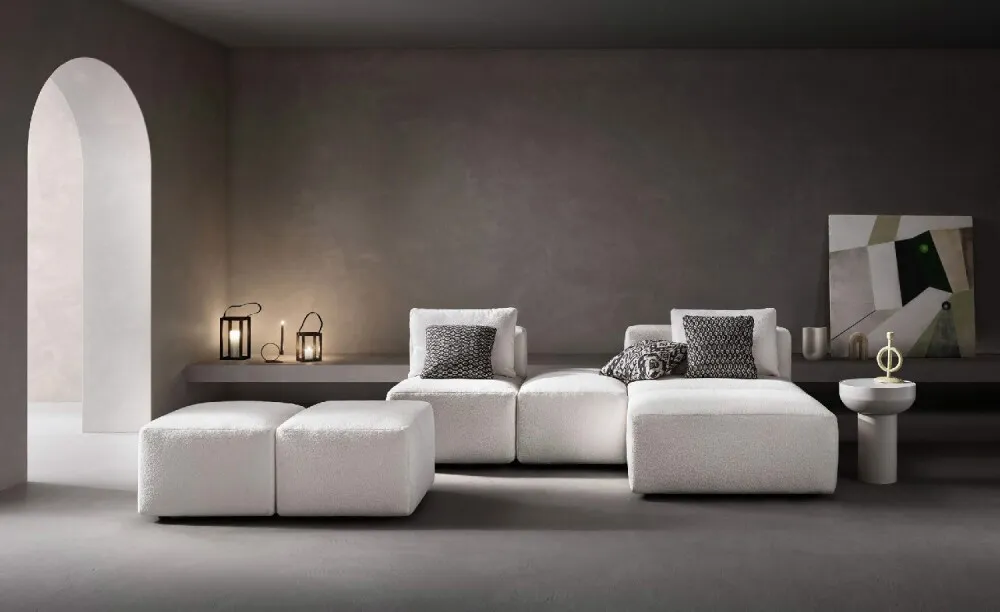
How to Clean the Sofa: Effective Methods for Every Upholstery Type
The sofa is one of the most heavily used pieces of furniture in the home: it is where we relax, eat in front of the TV, welcome friends and, in homes with pets, unsuccessfully try to establish which part of the seat belongs to the humans. It is therefore only natural for the question of how to clean the sofa to become the modern-day Hamlet dilemma. Water or no water? To scrub or not to scrub?
Dust, pet hair, crumbs, stains and unpleasant odours are almost inevitable. In most cases, however, it is possible to clean your sofa at home without calling in a professional. The secret is to use the method that suits the upholstery and avoid so-called universal remedies that are anything but universal.
Fabric, microfibre, leather and faux leather react differently to water, detergents, steam and rubbing. Let us see how to identify and clean them without turning a small stain into a permanent feature of your interior.
How to Clean a Sofa: What to Check First
Before using any product, look for the care label or the upholstery specifications. Check:
- whether the sofa has removable covers;
- whether the covers can be machine-washed;
- the maximum permitted temperature;
- whether water, solvents or steam are allowed;
- how the upholstery should be dried.
Some upholstery may also display a cleaning code:
| Code | Permitted method |
|---|---|
| W | Water-based cleaning products |
| S | Solvents specifically formulated for upholstery |
| WS or SW | Water-based products or upholstery-specific solvents |
| X | Vacuuming and dry brushing only |
An S code does not mean that you can use any solvent you happen to find at home: you need a product specifically designed for upholstered furniture. With an X code, on the other hand, there are no safe wet-cleaning methods for home use.
Before you begin, always vacuum the sofa and test the product on a hidden area. Use white cloths so that you can immediately spot any colour transfer, and blot rather than rub.

How to Clean a Fabric Sofa
The term fabric sofa covers many different upholstery materials: cotton, linen, polyester, blended fibres, chenille, velvet, bouclé and performance fabrics. The preparation is similar for all of them, while the cleaning method depends on the composition and the manufacturer's instructions.
Remove cushions, throws and anything that can be washed separately. Then vacuum the entire surface using the upholstery attachment—or, in short, whatever you have—at a moderate suction setting.
Pay particular attention to the seams, the gap between the seat and backrest, and the areas beside the armrests. That is precisely where the sofa carefully hoards crumbs, loose change and archaeological finds.
As a general rule:
- polyester, blended fabrics and performance fabrics are often suitable for water-based cleaning, but the label must always be checked;
- cotton and linen may shrink or develop water marks;
- velvet and chenille require minimal rubbing and should be worked in the direction of the pile;
- bouclé and open-weave fabrics should be vacuumed at low power without stiff brushes;
- viscose and delicate fabrics do not tolerate excessive moisture.

How to Wash a Fabric Sofa with Removable Covers
“Removable covers” does not automatically mean “machine-washable”. Some covers must be washed by hand or dry-cleaned.
If the care label permits machine washing:
- close zips and hook-and-loop fasteners;
- turn the covers inside out;
- select a delicate cycle;
- follow the stated temperature, which is often no higher than 30°C;
- use a small amount of mild detergent;
- avoid bleach and fabric softener unless instructed otherwise.
Do not overload the drum and do not tumble-dry the covers unless this is expressly permitted: heat could shrink the fabric.
When recommended by the manufacturer, you can refit the covers while they are still slightly damp, but never wet. They will be easier to smooth out and are more likely to regain their original shape.

How to Clean a Non-removable Cover Sofa
For a fabric sofa with non-removable covers that can be cleaned with water, the safest method is low-moisture hand cleaning.
Prepare a solution using approximately 250 ml of lukewarm water and two or three drops of a mild, clear, low-foaming detergent. Spray it onto the cloth, not directly onto the sofa, and blot the surface without soaking it.
To prevent water marks, clean a complete section—for example, the entire seat cushion or armrest—instead of heavily wetting one small area. Then wipe it with a second, barely damp cloth to remove the soap and press a dry towel onto the surface.
Leave it to dry with the windows open or a fan running in the room, without using a hairdryer, heater or direct hot air.
If the fabric cannot be cleaned with water, you can use low-moisture foam or a dedicated dry-cleaning product, as explained below.

How to Clean a Microfibre Sofa
Microfibre is hard-wearing and practical, but not every type is cleaned in the same way. Some varieties tolerate water, while others develop water marks easily and require solvent-based products.
After checking the cleaning code:
- with W, use lukewarm water and a very small amount of mild detergent;
- with S, choose a dry-cleaning product specifically designed for upholstery;
- with WS, either method may be used;
- with X, limit cleaning to vacuuming and brushing.
Blot the stain, working from the outside towards the centre. If you have used a water-based solution, remove any detergent residue with a second, barely damp cloth.
Once dry, the microfibre may look flattened or darker where it was treated. Gently brush it with a soft brush, always in the same direction, to lift the fibres and restore an even appearance.

How to Clean a Leather Sofa, Including a White One
A leather sofa can absorb substances, discolour and dry out when treated with harsh products. For routine cleaning, gently vacuum the seams and crevices, remove dust with a soft cloth and, where permitted, wipe the surface with a barely damp cloth before drying it immediately.
For a deeper clean, use a cleaner specifically formulated for the type of leather, applying it to the cloth rather than directly to the sofa. Work with light movements and treat one complete section at a time. Smooth leather, full-grain leather, nubuck and suede require different products: in particular, nubuck and suede must not be treated with creams designed for smooth leather.
Dust, body oils and colour transfer from jeans or dark fabrics are more visible on a white leather sofa. Deal with them immediately using a white cloth and a product specifically formulated for light-coloured leather, testing it on a hidden area first.
Avoid steam, alcohol, multipurpose wipes, degreasers, bleach, lemon, oils, shoe polish and direct heat sources. Do not try to whiten the leather: you could remove its protective finish and leave water marks or dull patches.

How to Clean a Faux-Leather or Synthetic-Leather Sofa
For routine faux-leather cleaning, a soft, barely damp cloth is generally sufficient. Where necessary and permitted, add a minimal amount of mild detergent, then remove it with a second cloth and dry the surface immediately.
Pay particular attention to the seams, where water could penetrate beneath the upholstery.
Do not use steam, solvents, alcohol, abrasive sponges or conditioning products intended for genuine leather. Faux leather is a coated material, and a greasy cream could leave a sticky film or alter its surface.
Steam, Foam or an Upholstery Cleaner: Which Method Should You Choose?
Several household tools can be used to deep-clean a sofa with non-removable covers. The right choice depends on the upholstery, not simply on the type of dirt.
| Method | When to use it | When to avoid it |
|---|---|---|
| Steam cleaner | On fabrics that tolerate heat and moisture | Leather, faux leather, S- or X-code upholstery, and delicate fabrics |
| Low-moisture foam | On compatible upholstery and sofas with non-removable covers | X-code upholstery or materials that do not tolerate the product |
| Dry-cleaning product | On S- or WS-code fabrics | W- or X-code fabrics, unless otherwise stated |
| Upholstery extraction cleaner | On water-resistant W- or WS-code fabrics | Sensitive S- or X-code upholstery, delicate materials or moisture-sensitive padding |

How to Steam-Clean a Sofa
A handheld steam cleaner can freshen up some fabric sofas and loosen surface dirt, but it should be used only when the upholstery specifications permit it—yes, we will repeat this again and again and again.
Vacuum the sofa first, fit the upholstery attachment with its cloth cover and select the lowest steam setting. Keep the nozzle moving continuously, without concentrating the jet on a single spot and without wetting the padding.
For a localised stain, place a white cloth beside the area and direct the steam diagonally towards the cloth rather than vertically into the fabric. The loosened dirt will be pushed towards the cloth.
Steam is most useful for maintenance and surface dirt. It is not a substitute for a dedicated cleaner on greasy stains and must not be used on organic stains.

How to Clean a Sofa with Foam or a Dry-Cleaning Product
Upholstery foams use less water than a liquid solution and are useful on compatible sofas with non-removable covers.
Apply the foam to a cloth or soft brush, not directly and in large quantities onto the sofa. Spread it without soaking the fabric, leave it for the stated contact time and remove it according to the product instructions.
On S-code upholstery, use a solvent-based cleaner formulated for upholstered furniture. Ventilate the room thoroughly, work away from flames or heat sources—please—and allow the product to evaporate completely.
Do not use alcohol, acetone or generic clothing stain removers: they could discolour the upholstery or dissolve certain finishes.

How to Use an Upholstery Extraction Cleaner on a Sofa
An injection-extraction machine, also known as a spray-extraction cleaner, sprays a cleaning solution into the fabric and immediately extracts it together with the dirt. It is suitable for many W- and WS-code upholstery materials, but not for those that are sensitive to water.
After dry-vacuuming the sofa:
- pre-treat only the most visible stains;
- follow the detergent dilution instructions;
- make slow, even passes;
- do not go over the same spot too many times;
- finish with several suction-only passes;
- leave the sofa to dry with good ventilation.
It is best to start in the morning and choose a dry day. Do not use the sofa until the surface, seams and edges are completely dry.

How to Remove Stains from a Sofa
Once you have identified the method that is compatible with the upholstery, you can adapt the treatment to the substance that was spilled.
Wine, Coffee, Tea and Soft Drinks
Absorb the liquid immediately without rubbing. On W- or WS-code fabrics, blot with cool or lukewarm water and, where necessary, with the mild-detergent solution. Finally, remove the soap with a barely damp cloth.
Salt is not a universal remedy for wine stains: it can build up in the weave and make the subsequent cleaning process more difficult.
Oil, Grease and Sauces
Lift away any solid material with a teaspoon—or a plastic card. On a W- or WS-code fabric, you can use one drop of mild, clear, additive-free washing-up liquid diluted in water.
Blot and rinse carefully. It is better to repeat a light treatment than to increase the amount of soap.
On S-code fabrics, use a dry upholstery stain remover instead.
Bl*od
Use cold water, never hot water, and blot using a small amount at a time. Where the upholstery permits it, you can use an enzyme cleaner specifically formulated for upholstered furniture.
Urine and Pet Stains
Absorb as much liquid as possible and apply a compatible enzyme cleaner. These products act on the organic residue responsible for the odour instead of simply masking it with fragrance.
Do not use steam before the stain has been removed.
Mud
Allow the mud to dry, gently brush it and vacuum it away. Only then should you treat any remaining mark. Cleaning it while it is still wet risks spreading it over a wider area.
Ink and Marker Pen
Avoid using alcohol or acetone indiscriminately: they could dissolve the colour of the upholstery as well. Choose a dedicated product that is compatible with the fabric code and apply it precisely without spreading the mark.

How to Remove Unpleasant Odours from a Sofa
To tackle unpleasant odours, vacuum beneath the cushions as well and wash removable covers, throws and cushion covers separately. If the odour has an organic source, use an enzyme cleaner; if it is caused by damp, allow the sofa to dry thoroughly and check that it is not positioned against a cold or poorly ventilated wall.
Bicarbonate of soda is often recommended as a deodoriser, but it is not suitable for every fabric: it can build up in the weave, leave residue on dark surfaces and be difficult to vacuum away completely.
Mistakes to Avoid When Cleaning a Sofa: You Have Probably Made at Least One
Even a good method can produce a terrible result when applied with too much enthusiasm. The most common mistakes are:
- scrubbing a stain vigorously;
- pouring the product directly onto the sofa;
- using too much soap or too much water;
- wetting the padding;
- mixing different cleaning products;
- using steam on incompatible materials;
- treating leather and fabric in the same way;
- using bleach, alcohol or generic degreasers;
- drying the upholstery with a hairdryer or heater;
- sitting on the sofa while it is still damp.
Vinegar, bicarbonate of soda, lemon and Marseille soap are not universal remedies. Before using them, you must check that they are compatible with the upholstery: “natural” does not automatically mean safe for every material.

Frequently Asked Questions About Cleaning a Sofa
How Can You Clean a Sofa Without Leaving Water Marks?
Vacuum the surface first, use very little product and treat a complete section rather than heavily wetting a small area. Always remove any remaining detergent and encourage even drying.
On light-coloured fabrics, filtered or demineralised water may be helpful, particularly in areas with very hard water.
Can You Clean a Sofa with a Handheld Steam Cleaner?
Yes, but only if the upholstery tolerates heat and moisture. Use the upholstery attachment, select the lowest steam setting and keep the nozzle moving at all times. Avoid steam on leather, faux leather and delicate fabrics.
Can You Use Bicarbonate of Soda on a Sofa?
Only when the manufacturer permits it. Bicarbonate of soda can absorb some odours, but it tends to remain in the weave and may leave residue on dark, velvet or long-pile fabrics.
Can You Use Washing-Up Liquid?
On a W- or WS-code fabric, a single drop of a mild, clear product, thoroughly diluted, can help tackle a greasy stain. It must be rinsed carefully, however, because soap residue attracts fresh dust.
How Long Does a Sofa Take to Dry?
A light clean may take only a few hours to dry; after using an upholstery extraction cleaner, it may take most of the day. Temperature, ventilation, fabric and the amount of water all make a difference. Before using the sofa, check that the seams and edges are dry as well.
5 Easy-to-Clean SAMOA Sofas
SAMOA offers several fabrics designed to make everyday life easier: Enjoy is water-repellent, Dandy and Joint are stain-resistant, Velvet combines a velvet look with more practical maintenance, while Zoya is designed to better withstand scratching and snagging in homes with pets. This means the sofa can truly be lived on—by you and your animals too.
As a general rule, SAMOA fabric sofas have fully removable covers, while leather models do not, or have only partially removable covers. This information will always be specified in the product description.
Click here to go directly to the page where you can purchase fabric samples. If you subsequently decide to buy a SAMOA bed or sofa, the cost of the fabric samples will be refunded!
SAMOA JEST Sofa
Samoa Jest is a contemporary sofa featuring a generous seat and removable backrests that can be positioned freely to suit your comfort preferences. Available in numerous sizes and upholstery options, the fabric version is particularly easy to maintain because its covers are fully removable.
Being able to remove the upholstery makes periodic cleaning easier, while the movable backrests provide better access to the seat and to the spaces where dust and crumbs tend to collect. The appropriate washing method will still depend on the fabric selected.
SAMOA JEST SPECIAL Sofa
Samoa Jest Special retains Jest's generous seat and removable backrests but stands out for its 18 cm-high feet, which make the design look lighter and more streamlined. The fabric version has fully removable covers, and the backrests can be removed to provide easier access to the entire surface. The real advantage when cleaning, however, is the space beneath the base: vacuum cleaners and robot vacuums can pass underneath without forcing you to move the sofa. Attractive to look at and, above all, less inclined to hide entire colonies of dust.

SAMOA ARES Sofa
Samoa Ares differs from Jest and Jest Special through its more rigorous, structured design: the low backrest aligns with its distinctive trapezoidal armrests, while the numerous modules can be used to create linear or made-to-measure configurations. The fabric version has fully removable covers, and its 18 cm-high feet make it easier to clean underneath with a broom, vacuum cleaner or robot vacuum. Less of a “giant pouffe” effect and more architectural elegance, without sacrificing practicality.

SAMOA CRISP Sofa
Samoa Crisp Essential Compact is the right choice for small living rooms or spaces where every centimetre counts. At only 80 cm deep, with clean lines and fixed backrests, it takes up less space than the other models in this selection. It is also available with a reversible chaise section and, in the fabric version, has fully removable covers. The 14 cm-high feet also make it easier to clean underneath with a broom, vacuum cleaner or robot vacuum: compact in size, but not very welcoming to dust and crumbs—despite a name that might make you hungry!

SAMOA AVALON Sofa
Samoa Avalon stands out for its sliding backrests, which increase the seat depth by 25 cm, and its multi-position adjustable headrests: a more dynamic, relaxation-oriented solution than models with fixed lines. The fabric version has fully removable covers, while the 18 cm-high feet once again make it easier for vacuum cleaners and robot vacuums to pass beneath the frame. Comfortable to live with, attractive to look at and easy to keep tidy.

Useful Links
Cleaning a sofa at home is possible, provided that DIY does not turn into improvisation. Knowing the material, acting quickly and using only a small amount of water and detergent can resolve most everyday accidents.
Steam, foams and upholstery extraction cleaners can provide a deeper clean, but only on compatible upholstery. When buying a new sofa, it is therefore worth considering not only appearance and comfort, but also whether the covers are removable, how they can be washed and the clearance beneath the sofa.
Because the ideal sofa should be beautiful and comfortable, of course, but also ready to face real life—crumbs and muddy paws included.
Any doubts or questions? We are here for you: do not hesitate to contact our consultants for a free consultation. And if you happen to be stretched out on the sofa wondering what to read next, here are a few more genuinely useful articles on everyday cleaning:
- How to Clean a Mattress: 6 Tips for Always Sleeping on a Clean Surface
- How to Clean the Air Conditioner? 7 Practical Tips for Better Air Quality and Lower Energy Bills
- How to Clean the Oven in 5 Minutes: 7 Tips for Getting It Sparkling Clean Without Stress
Finally, here are a few useful links to help you search our catalogue: more than 200 sofas and sofa beds in every style and size, designed to meet all kinds of needs.
See you next time!
Your Vieffetrade Team