
Save Money While Cooking: Induction Hobs (and More) That Make a Difference
-
30 December, 2025
Table of Contents
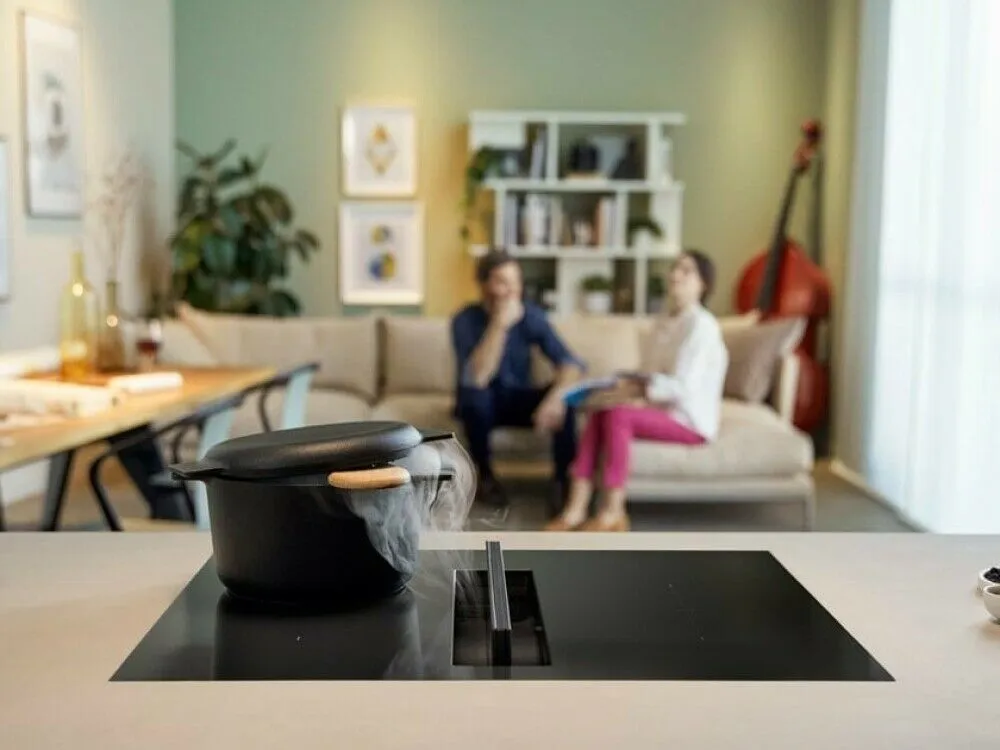
You saw it at a friend's house, then you saw it again when you happened to walk past a shop… and that's when it started: that idea that keeps coming back every time you walk into the kitchen. Induction hobs have this “magnetic effect”: clean lines, a tidy surface, and the feeling that everything is simpler even before you switch it on.
It's not just a question of aesthetics (which plays its part), but of everyday practicality: faster cooking times, precise control and more efficient energy consumption. And the funny thing is that even if cooking isn't your favourite activity, you end up thinking, ‘Okay, let's give it a try.’ Because when cooking stops complicating your day, it becomes natural to indulge in a few more experiments.
Why Choose an Induction Hob?
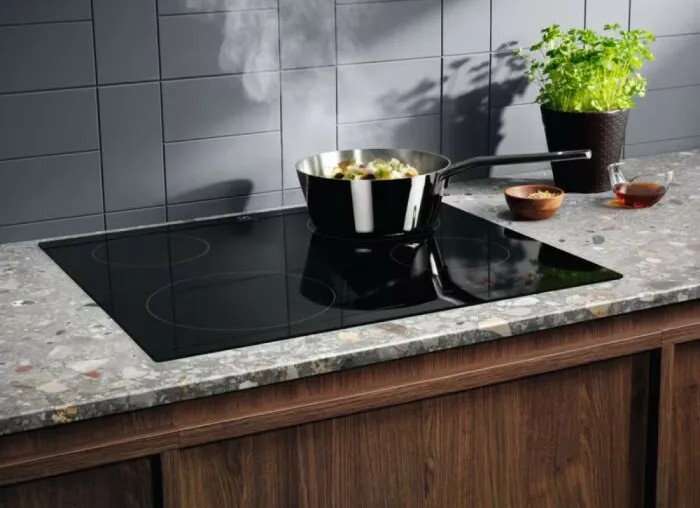
Choosing induction means focusing on energy efficiency and precision. Unlike other systems, induction heats the pot directly via an electromagnetic field, reducing heat loss. This can translate into faster cooking times, less wasted energy and more accurate temperature control. Furthermore, those looking for a modern kitchen appreciate the aesthetic impact: smooth surfaces, clean lines and a visually tidier environment.
The advantages
- Savings and efficiency: heat goes ‘where it's needed’, with greater efficiency and often shorter cooking times. In addition, manufacturers are very familiar with domestic needs, so most induction hobs are equipped with a power limiter, allowing you to set it according to your meter.
- Easy cleaning: smooth surface, no grids or burners; dirt often does not stick easily and a cloth is all you need.
- Precision cooking: precise power adjustment, useful for boiling, melting and keeping food warm.
- Advanced features: booster, timer, pot recognition, flexible zones (in some models), safety lock.
- Contemporary design: minimalist look that enhances the kitchen worktop and blends easily with different styles.
The disadvantages
- Higher initial cost: compared to traditional solutions, especially on mid- to high-end models.
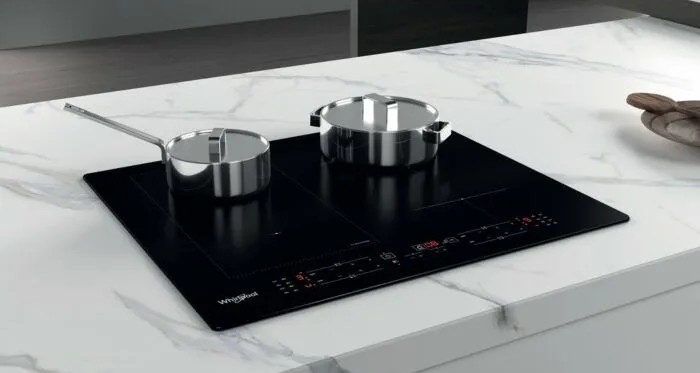
- Compatible cookware: suitable (magnetic) materials are required, so you may need to replace some of your cookware.
- Electrical system and power: in some homes, it may be necessary to adjust the available power or manage loads.
- Surface sensitivity: glass-ceramic requires care to avoid scratches and impacts, even though it is designed to withstand daily use.
Induction Hob or Electric Hob?
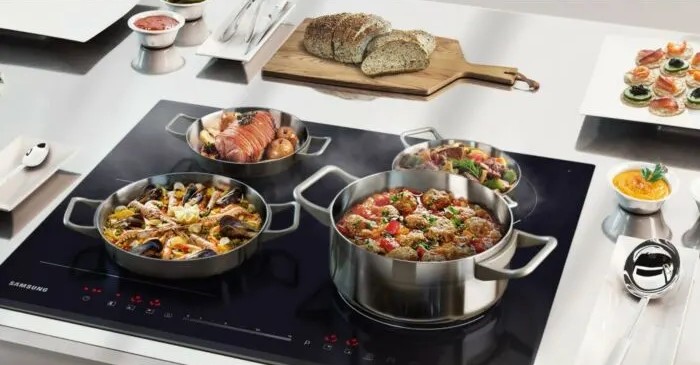
Compared to an electric hob (glass-ceramic radiant or resistance), induction differs mainly in terms of user experience and certain practical aspects. An electric hob works by “heating” an area that then transfers heat to the pan: this results in greater thermal inertia, meaning that it takes longer to reach and drop in temperature. In practical terms, if you lower the power or switch it off, the area remains hot for longer: this can be an advantage for those who want to take advantage of residual heat, but it is also a limitation when you need to react quickly while cooking.
On the plus side, electric hobs are usually cheaper to buy, often easier to install and, above all, fully compatible with any pot (there are no restrictions on materials or magnetic bases). On the downside, however, they suffer from thermal inertia and a surface that remains hot for longer, with a greater risk of “continuing to cook” even when you don't want it to.
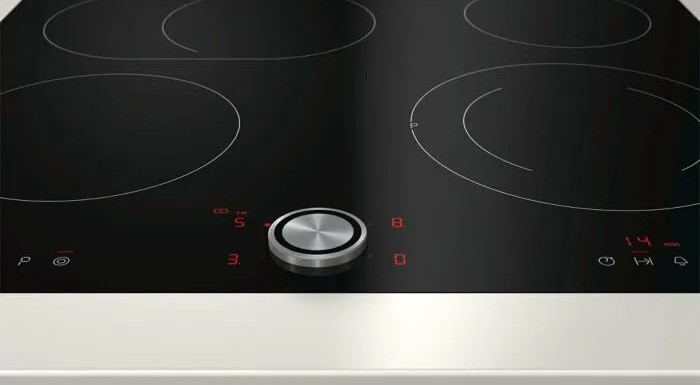
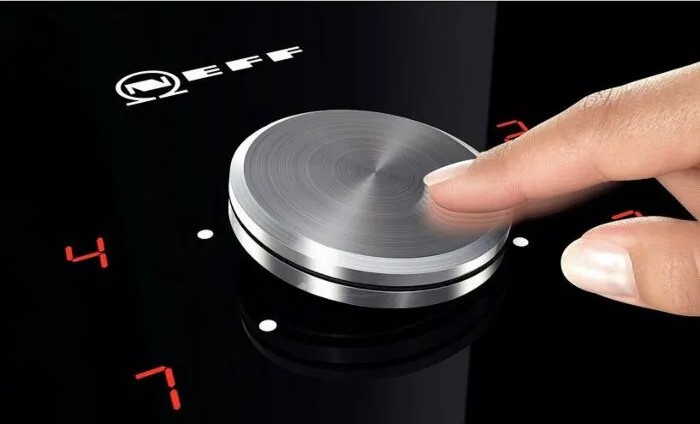
In comparison, the specific advantages of induction are linked to the fact that it does not depend on heating a resistance: the response to commands is generally more immediate and the area tends to cool down faster once the pot is removed. The specific disadvantages, on the other hand, mainly concern the need for suitable pots and pans and a possible greater sensitivity to small noises or vibrations (in some hob-pot combinations), elements that are less prevalent with traditional electric hobs. In summary: electric = more “universal” and often cheaper; induction = more responsive and controllable, but with a few more requirements.
Hoods for Induction Hobs: Which One Do You Need?
Not all cooker hoods are equally suitable for induction hobs: technically, many of them work, but to achieve truly good results, it is best to choose one that is the right size and take a few precautions. The key parameter is the flow rate (m³/h), which is generally calculated to ensure that the hood can replace the air in the kitchen about 10–12 times in an hour: therefore, flow rate ≈ room volume (m³) × 10–12.
If, for example, the kitchen is 4×3×2.7 m (approximately 32 m³), an indicative flow rate can be between 320 and 380 m³/h, bearing in mind that in open-plan environments or if you often cook “heavy” meals, you may need more. Another typical issue with induction is condensation: cooking can generate a lot of steam and, when it encounters cold surfaces, it can turn into droplets; for this reason, anti-condensation hoods are often recommended, designed to limit the phenomenon (e.g. with surface management and condensation collection). For more information, please refer to this article.
Finally, if the hood is a recirculation hood, bear in mind that its effectiveness depends greatly on the filters (and maintenance) and it often makes sense to opt for a slightly higher power rating than for an external exhaust hood.
Induction Hobs with Integrated Extractor Hood
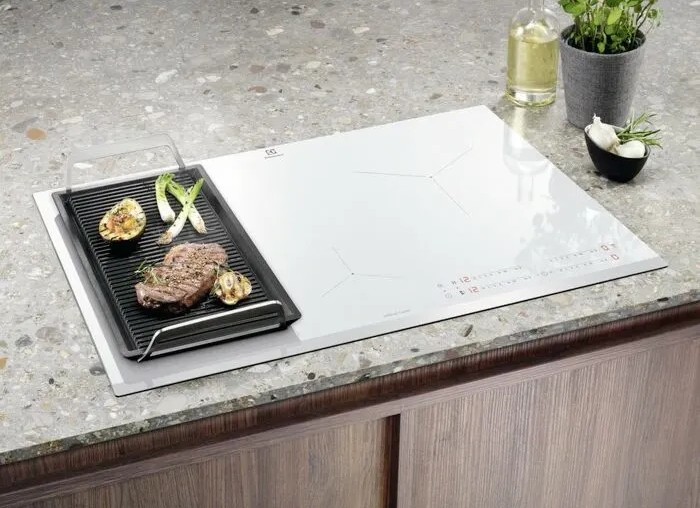
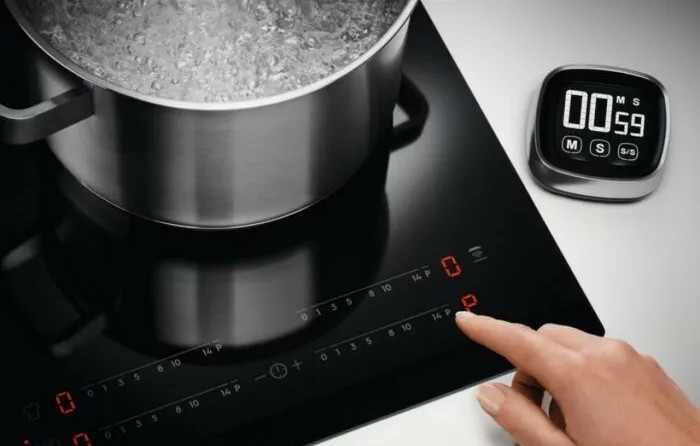
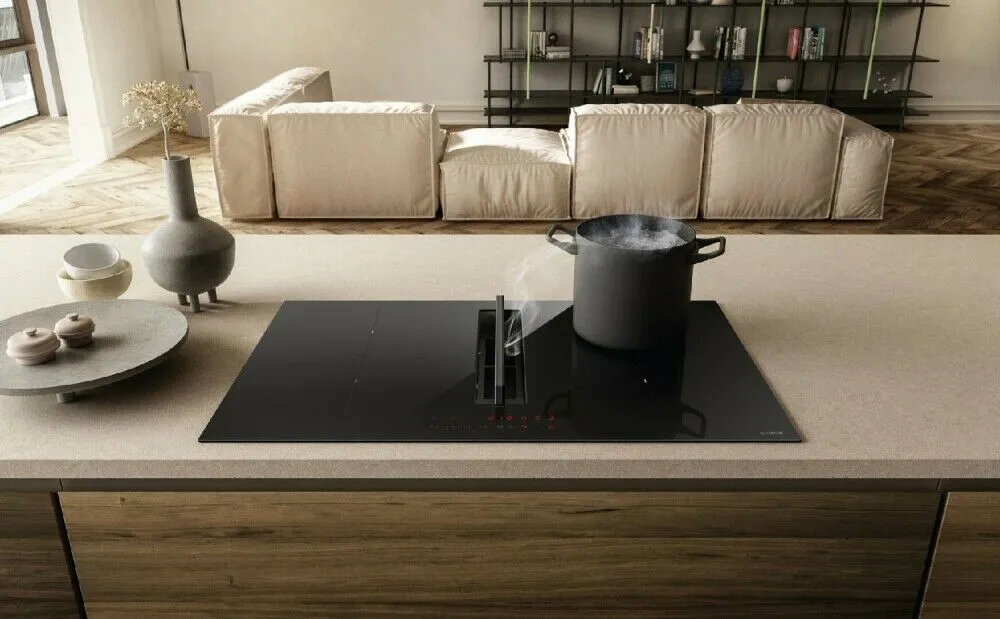
Hobs with integrated hoods combine two functions in one: you cook and the steam is extracted directly at the source. The result is a tidier kitchen, without visible hoods, perfect for modern islands and open spaces.
Advantages: extraction very close to the pots and pans, minimalist design, less odour diffusion and, often, automatic adjustment based on cooking power.
Disadvantages: higher initial cost, filters to be cleaned or replaced regularly, possible reduced under-counter space and noise perceptible at high speeds.
Among the most popular lines, we present the Elica NIKOLATESLA hobs with integrated hoods: excellent performance, latest-generation design and total installation flexibility.
The Timeless Classics: Why Choose a Gas Hob Again?
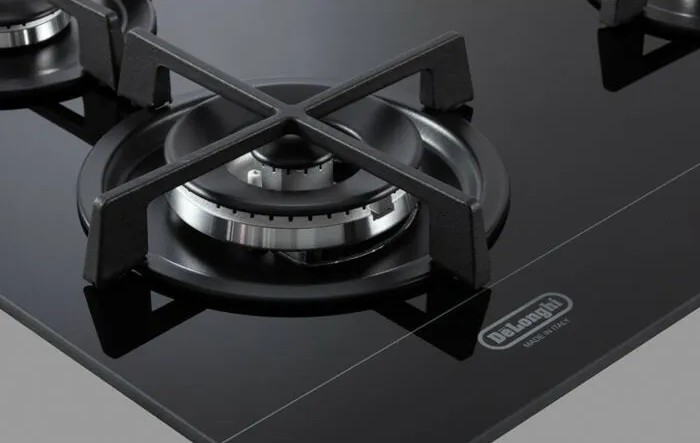
If you really love to cook, the gas hob remains a great classic… and not just for nostalgic reasons: it is immediate, precise and gives you visual control of the flame, perfect for sautéing, browning, reducing and managing long cooking times without any surprises.
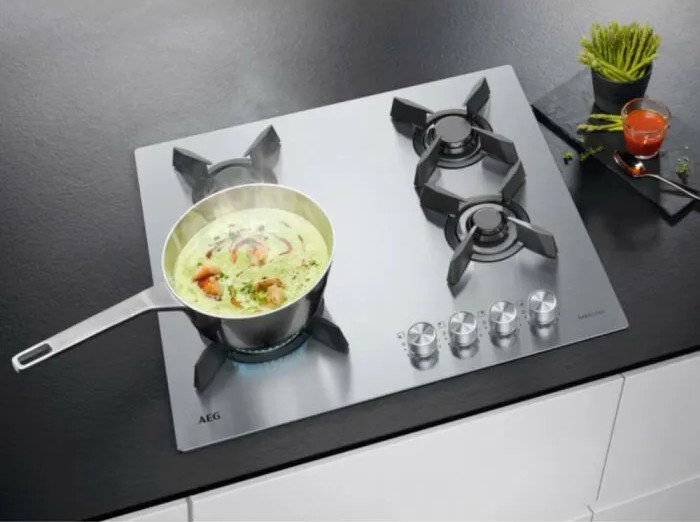
The Vieffetrade catalogue offers a wide range of high-quality products, with over 40 built-in sizes to suit every kitchen, from compact to extra-large models. You can choose from sturdy, easy-to-match finishes such as stainless steel or enamelled steel, and rely on leading brands such as Electrolux, De Longhi, Franke and Whirlpool. And for those who want to take it up a notch, there are high-end brands such as Bertazzoni, ILVE and Fulgor.
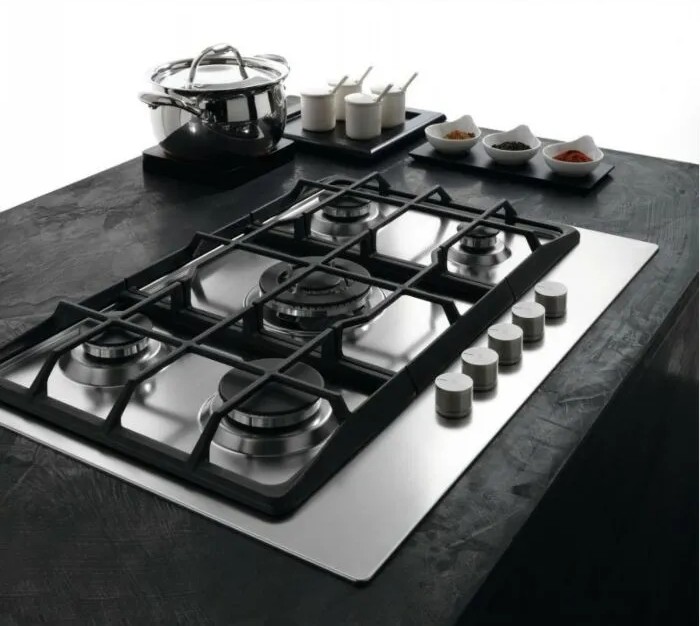
But how does gas compare to induction? Gas wins in terms of compatibility (it works with any pot), instant power management and performance with techniques such as wok cooking and high heat. On the other hand, it requires more attention to cleaning (grates and burners) and, in general, has greater heat dispersion than induction. Induction is unbeatable in terms of efficiency, boiling speed and ease of cleaning, but it requires suitable pots and pans and a different, less traditional “feel”.
In summary: if you are looking for control, versatility and an authentic cooking experience, gas will never disappoint you.
Mixed Hobs: For All Recipes and All Habits
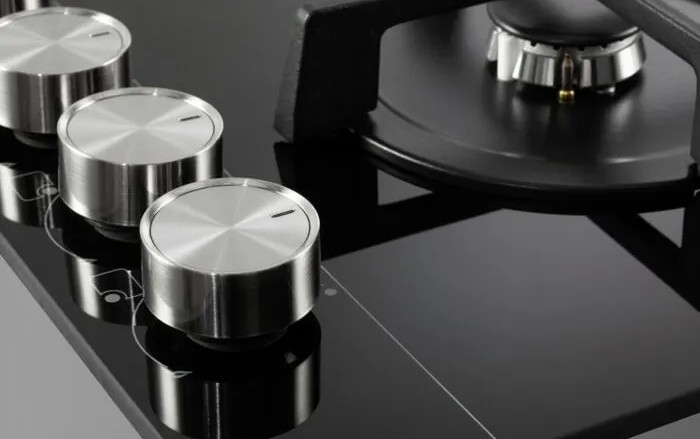
Combined hobs (gas + induction or electric) are the ideal choice for those who want it all: they combine the familiarity of a flame with the practicality of modern cooking zones, allowing you to adapt to any recipe or cooking habit. They are ideal if some members of your household prefer the immediate control of gas (for sautéing, flambéing, using woks or special pots) and others prefer the more orderly and rapid management of induction/electric hobs for boiling, heating or cooking with precision.
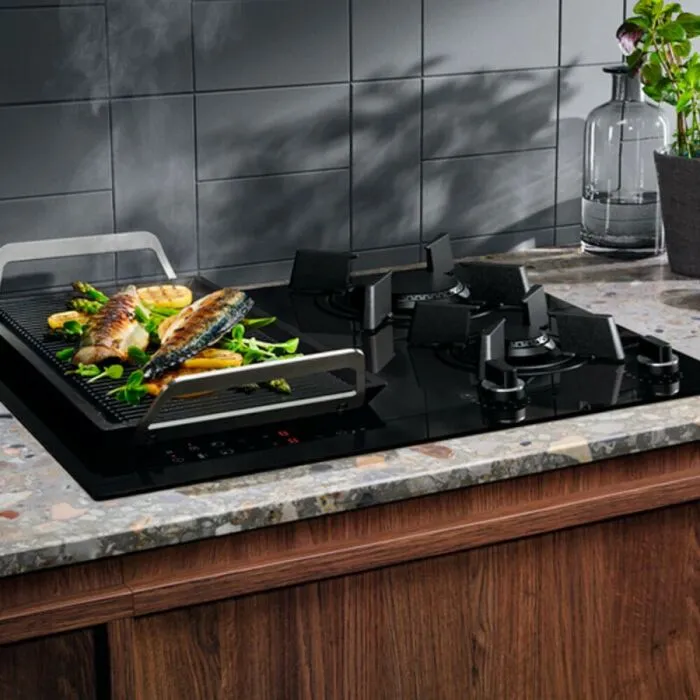
Pros: maximum flexibility, continuity of use in the event of power limitations or different preferences among family members, and the possibility of using existing cookware without having to replace everything.
Cons: often more expensive than “gas only” or “induction only” hobs, more complicated installation (two systems are required), less uniform appearance and more varied maintenance (burners to clean + smooth surface). In summary: choose them if you want total versatility without having to compromise on anything.
In conclusion, induction wins because it makes everything more straightforward: turn it on, cook, clean, done. If you like precision and want a solution that combines aesthetics and everyday practicality, it's a choice that makes more sense today than ever.
Of course, it requires some consideration, but these are manageable details when you have a clear goal: to cook better, with less waste and fewer complications. And if you are considering alternatives such as integrated hoods, gas or mixed models, the good news is that our catalogue has a solution for every style of kitchen!
Do you have any doubts, questions or are you undecided between two or more models? Contact us!
Our consultants are always ready to make your shopping experience safe, informed and as satisfying as possible.
See you in the next article!
Your Vieffetrade Team