
How to Place Dining Table and Sofa: 7 Tips to Get It Right
-
25 March, 2026
Table of Contents
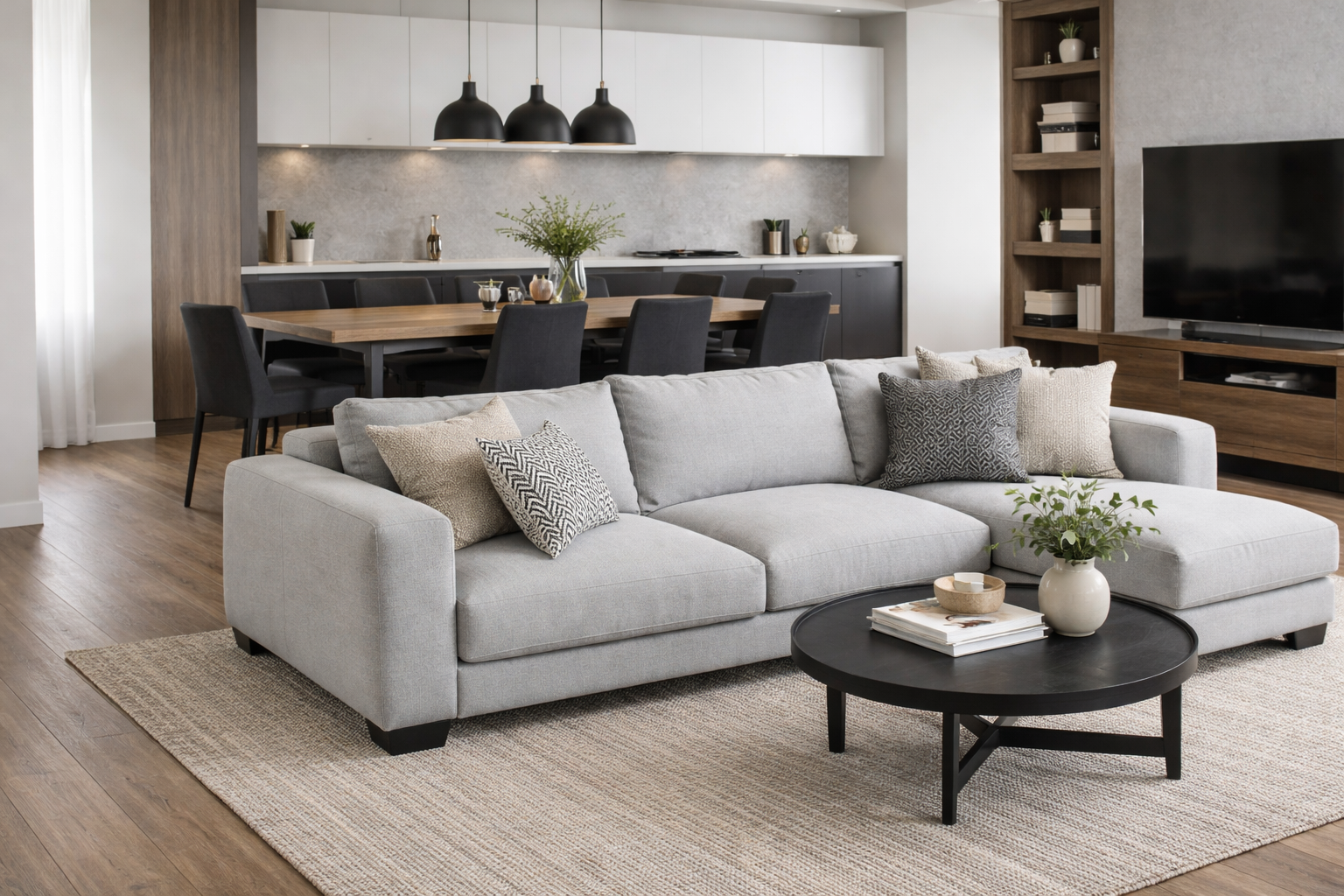
Do you finally have the chance to furnish your open-plan living area or dining room, yet the endless possibilities unfolding before your eyes are leaving you feeling a bit overwhelmed? I understand, but it all boils down to one simple question: how should you place dining table and sofa? The answer, as is often the case with interior design, is: it depends. But don’t panic – Vieffetrade is here to make your life easier!😉
In this guide, we’ll look at how to place your dining table and sofa in a practical way, with useful ideas that will also help you choose the most suitable pieces based on your style, the size of your home and how you actually use your living area.
1. Do you choose the table or the sofa first?
Well, assuming you're starting from zero, it's usually best to choose the sofa first.
The reason is simple: the sofa is almost always the piece of furniture that takes up the most space, dictates the flow of movement, defines the seating area and also determines the focal point of the living room. Once you’ve decided on the sofa, it’s easier to work out how much space is actually left for the table and which shape or size makes the most sense.
In practice:
- start with the sofa if the living room is small, open-plan, or if the seating area is the focal point of the room;
- start with the table if the dining area is the one you use most, if you often entertain guests, or if the table has to be placed in a specific spot near the kitchen.
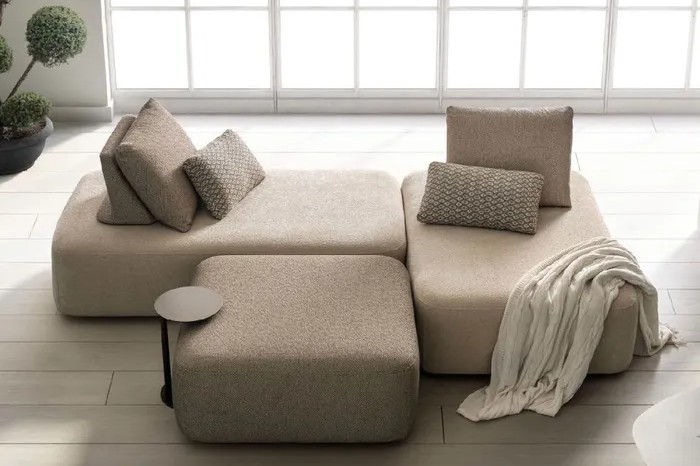
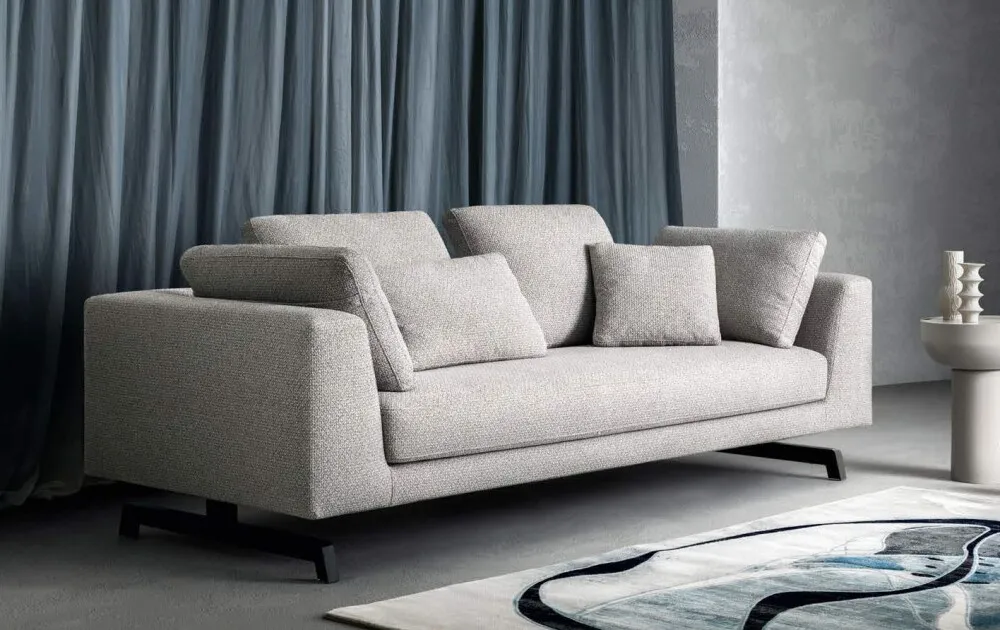
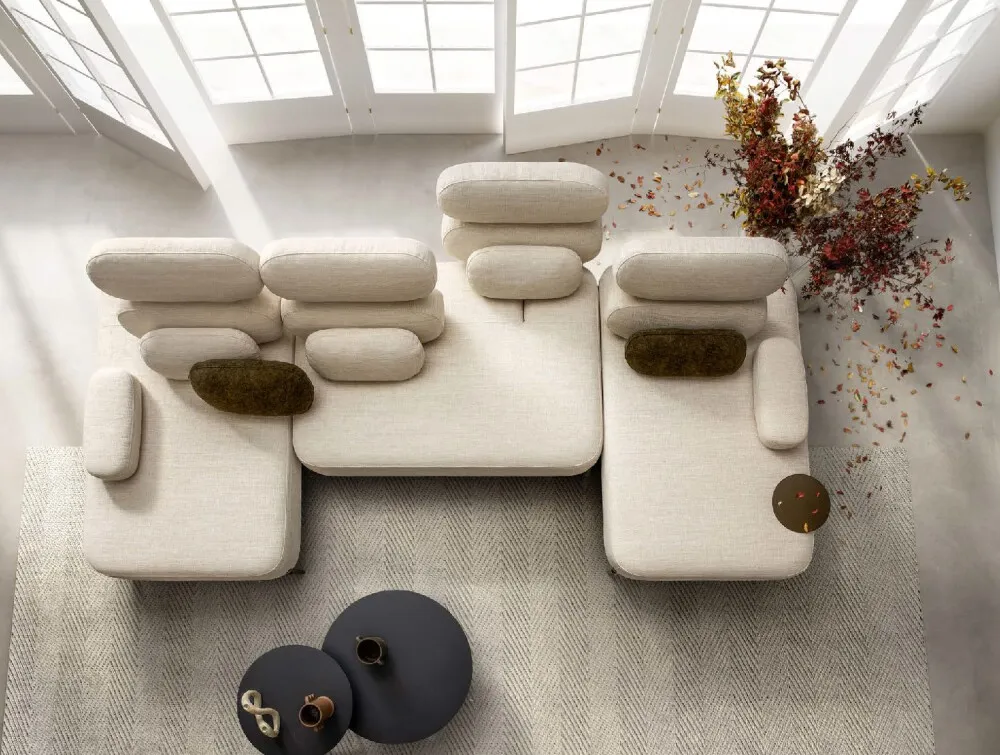
Here’s the first gem: if you want to create a flexible, contemporary living area, the Samoa Matrix Sofa is an interesting option, especially if you’re looking for a configuration that adapts well to the space. If, on the other hand, you prefer a more orderly and linear layout, the Samoa Ares Sofa can serve as a very balanced starting point. Let’s continue!
2. Yes, but where and how should you arrange the dining table and sofa?
So where should you actually place the table and sofa? This is where the shape of the room comes into play. Generally speaking, it’s best to position the sofa facing the focal point of the living room, such as the TV, a wall unit, a fireplace or even a lovely view. The table, on the other hand, works best if it’s placed in the area that’s most convenient for everyday use – so near the kitchen and, if possible, in natural light.
The basic idea is simple: the table should be associated with socialising, the sofa with relaxation. That’s why, in well-designed living rooms, the two elements interact with each other without getting in each other’s way.
Open-plan space with a linear kitchen
This is one of the most common layouts. The most natural solution here is to create a clear sequence: kitchen → table → sofa.
In practice:
- the table is placed near the kitchen;
- the sofa is positioned further back, facing the TV or the wall unit;
- its backrest can serve as a soft partition towards the dining area.
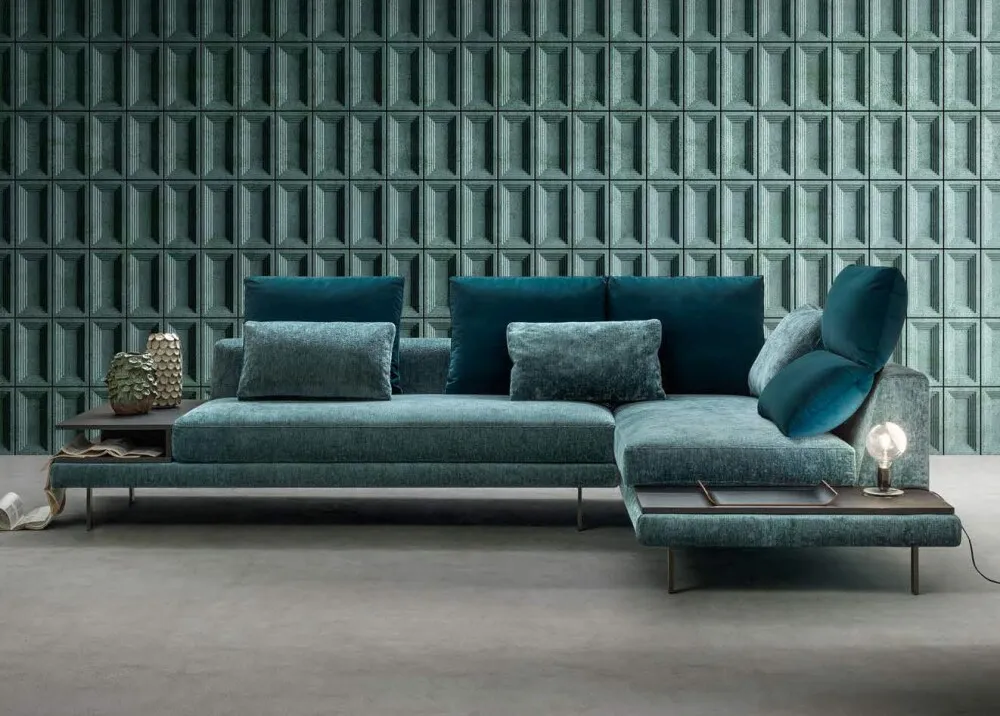
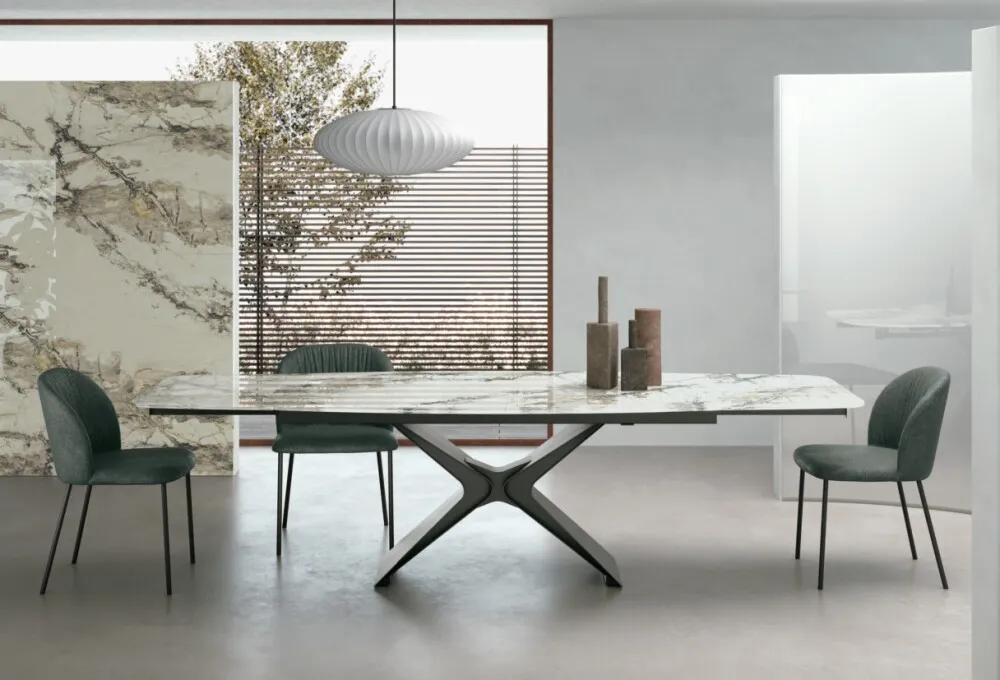
In a setting like this, the Samoa sofa MATRIX works well if you want to create a flexible yet well-defined living area, whilst the Sedit table BOMA is ideal if you need a versatile dining area, suitable for both everyday use and when you have guests.
Furnishing an open-plan space with an island or peninsula
When the kitchen already has a strong visual presence, the table must blend in harmoniously, without looking like a random addition.
An effective layout could be:
- an island or peninsula as the primary focal point;
- a table that flows seamlessly from the kitchen but retains its own identity;
- a sofa positioned either facing or with its back to the kitchen, to visually enclose the relaxation area.
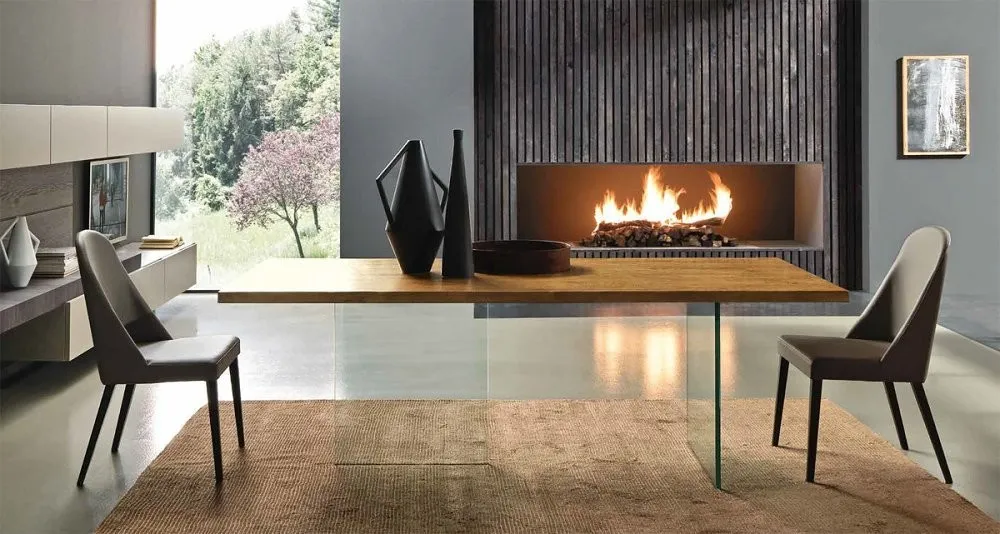
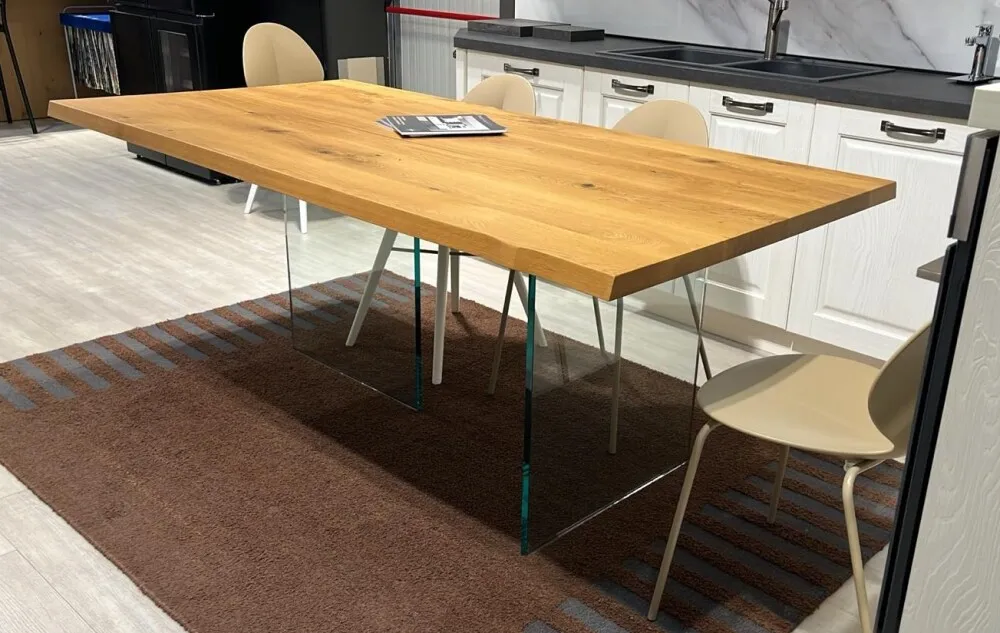
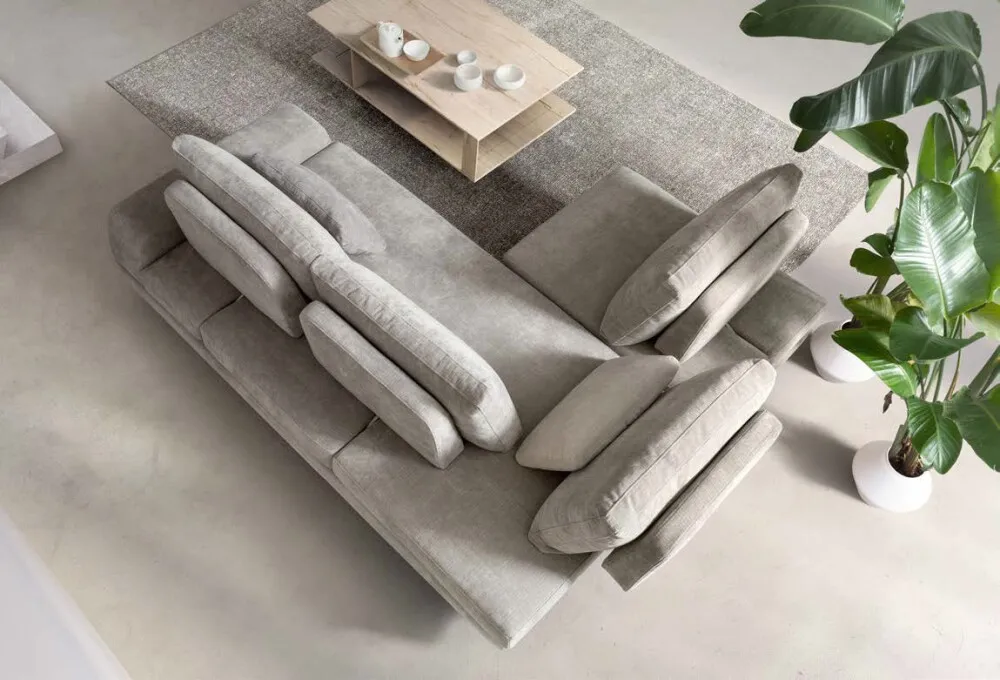
Here, it is important not to pile too many bulky items in the same spot. If you want to lighten the overall look, the FGF table GHOST is a very effective solution. If, on the other hand, you want to give the dining area more presence without sacrificing balance, the Sedit table BALTIK can serve as an excellent link between the kitchen and the living room. On the relaxation side, the Samoa sofa SOUND TIDY fits well into open-plan, multi-functional spaces, where the living room needs to remain cosy yet dynamic.
Long rectangular living room
When the room is long and narrow, it makes sense to make the most of this layout and arrange the different areas in sequence.
For example:
- a table in the part closest to the kitchen or the window;
- a sofa in the cosiest part of the room;
- a clear, unobstructed passageway between the two areas.
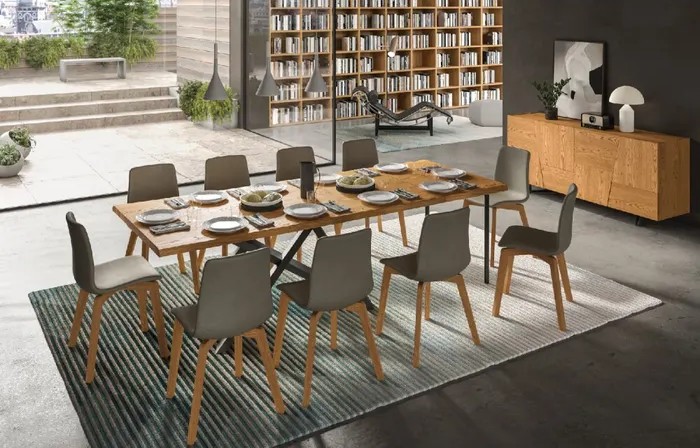
A statement table works very well here, capable of giving the dining area its own identity. The FGF CROSSING table is perfect if you want a more striking and contemporary look. For the relaxation area, a model such as the Samoa ARES sofa helps to keep the living room tidy, uncluttered and well-proportioned.
Small living room or compact living area
When space is limited, the key is visual lightness.
So it’s best to:
- place the table near a natural light source;
- position the sofa against a wall or facing the living room’s focal point;
- use a few well-chosen pieces, without overcrowding the centre of the room.
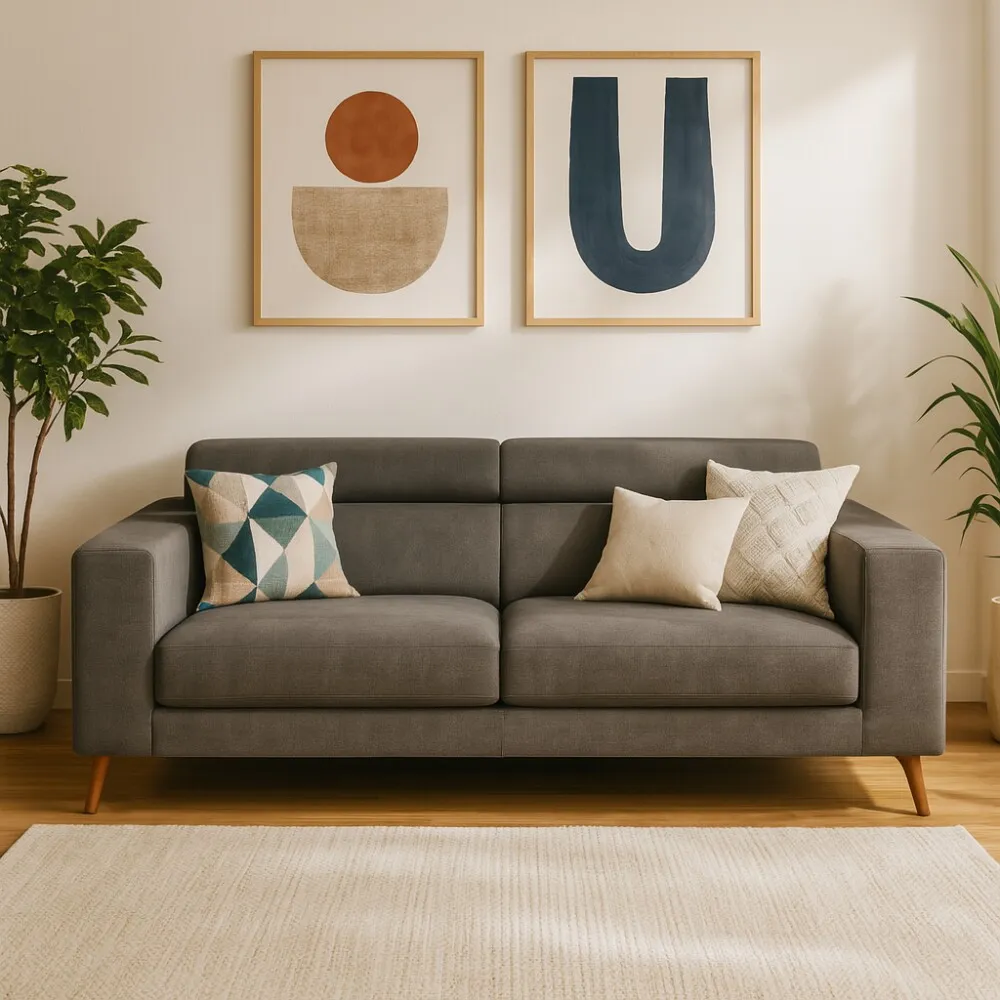
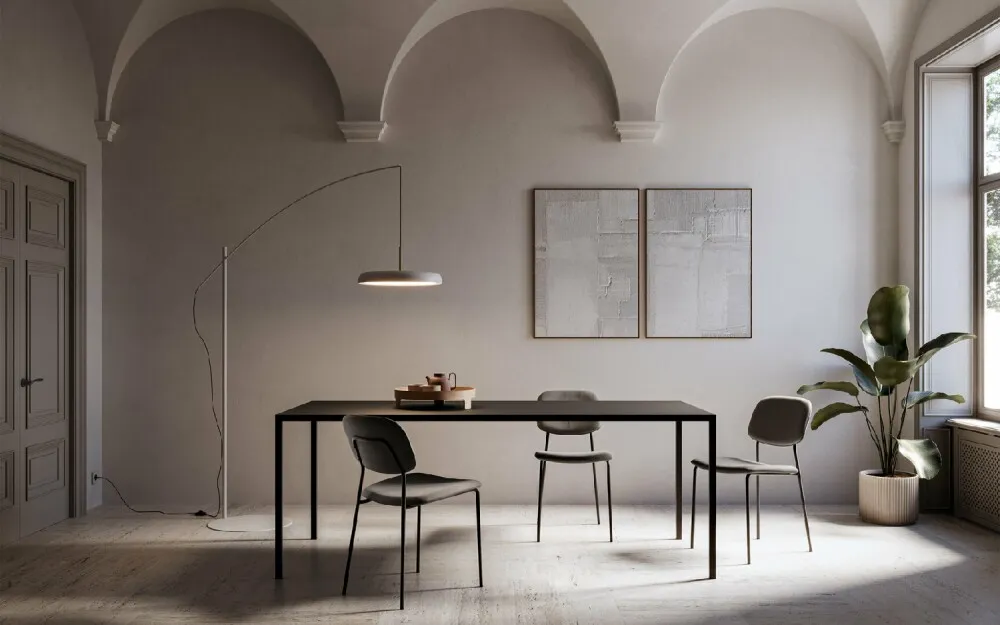
Sleeker furniture works well here. The Felis FRED sofa is very well suited to this type of setting, as it maintains an elegant yet light presence. On the dining side, you could opt for an Arredo3 table BASIC for a more minimalist style, or the Ghost Table if you want to give the room even more visual breathing space.
Spacious living area with a clearly defined dual function
When you have a large living room, you can create two distinct areas: one dedicated to relaxation and another, more visually striking, for dining.
In this case, you can experiment with:
- a statement sofa placed in the centre or slightly set forward;
- a table positioned well apart, yet in keeping with the overall style;
- accessories that help define the two zones, such as sideboards, bookcases, large potted plants or a console table.
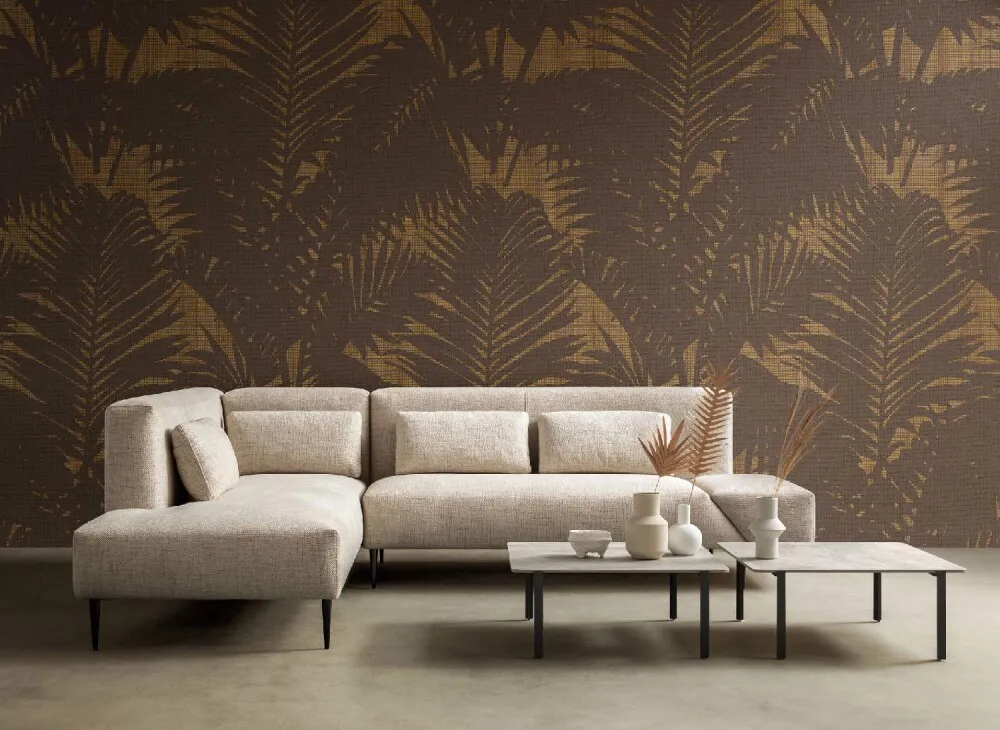
If you want to give the living room a bold character, the Samoa SPIN sofa could be a very interesting choice. For the dining area, the Arredo3 table ARCO BOTTE is perfect when you want a softer, more refined aesthetic, whilst the Sedit table BALTIK lends itself well to refined contemporary settings.
One final tip that always applies: it’s best to avoid having the back of the sofa be the first thing you see when entering the house. It’s a small detail, but it can make the entrance feel less welcoming.
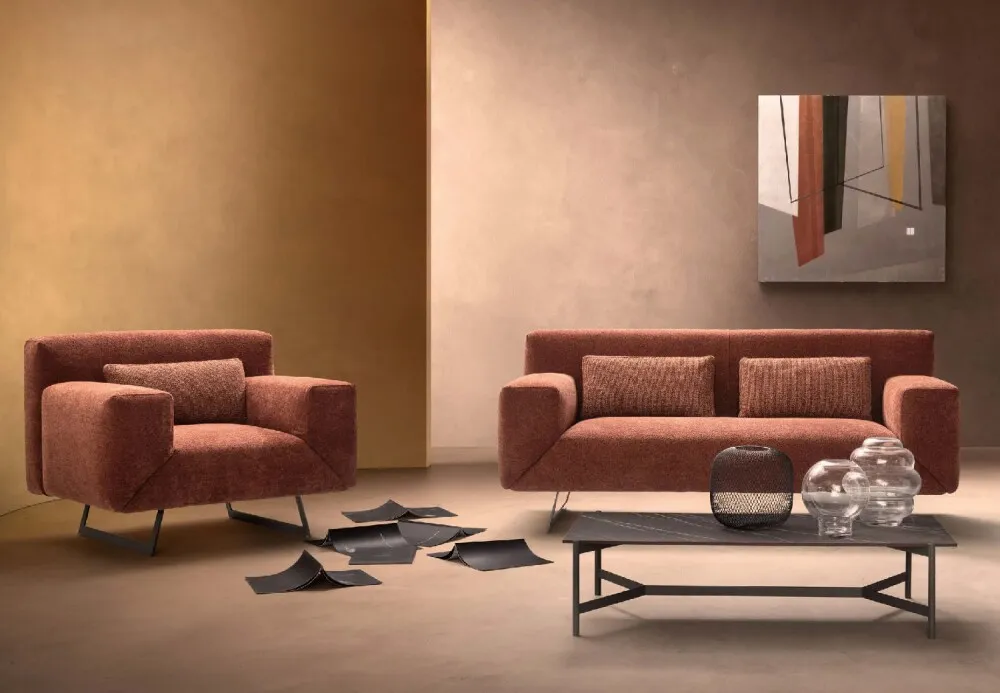
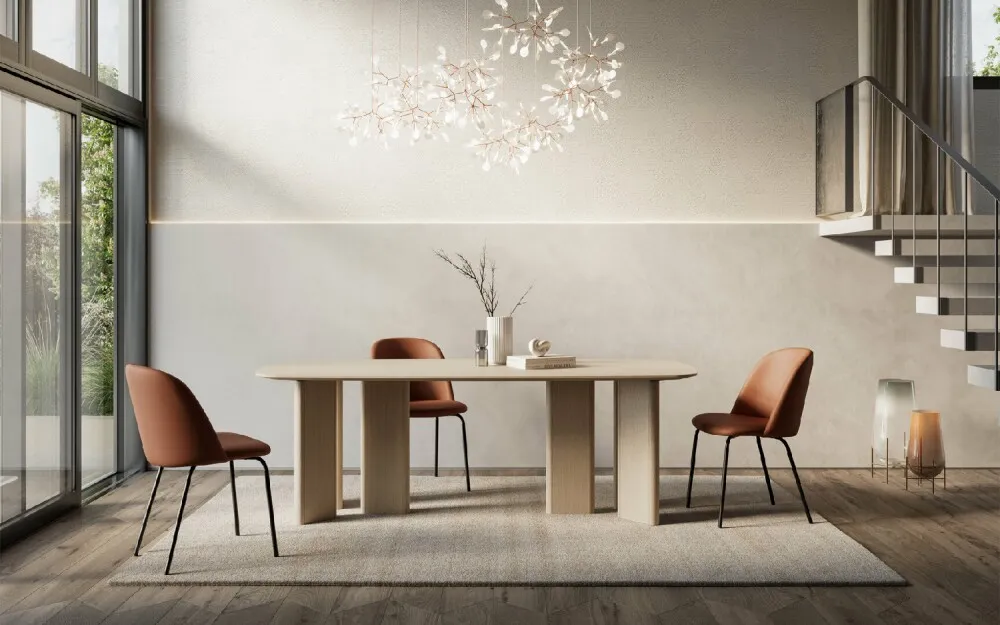
3. What distance should there be between the sofa and the table?
Now we come to the really practical part – the one that often makes the difference between a living room that looks good only in photos and one that tests your patience every day.
Between the edge of the table and the back of the sofa, allow for:
- 110–120 cm as a realistic minimum, if there are chairs on the side of the table that are used every day;
- 130–150 cm as the most comfortable measurement, if someone needs to pass through that space whilst others are seated;
- 90–100 cm only in specific cases, for example if there are no chairs on the side facing the sofa or if you use a bench.
In short: below 100 cm, in most cases, the dining area starts to feel cramped. And nobody wants to turn every dinner into a bit of a contortionist’s act.
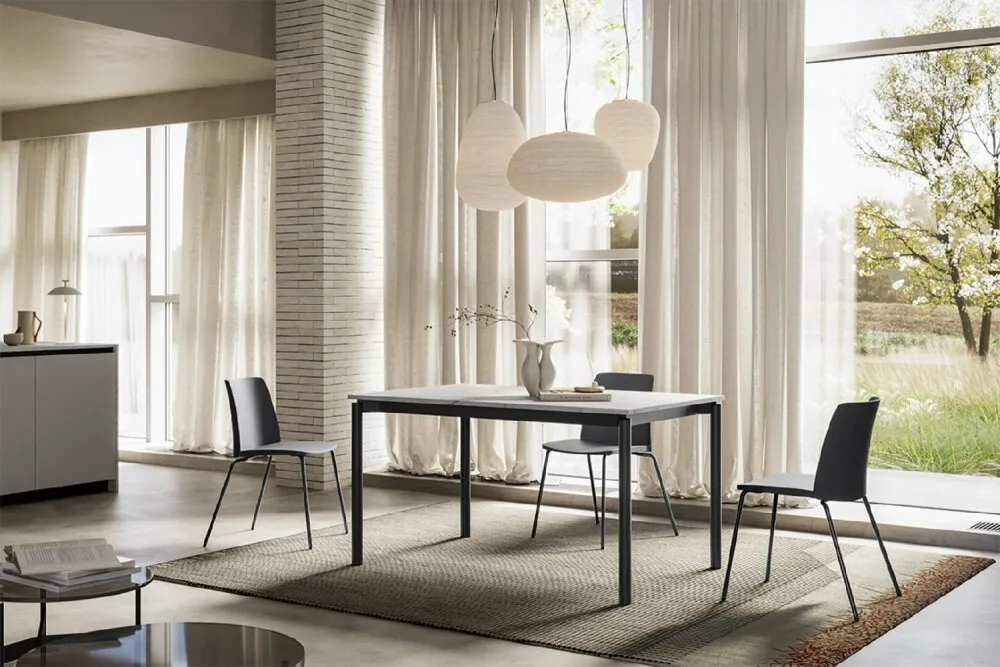
4. Mistakes to avoid
Even with beautiful furniture, it doesn’t take much to create a cluttered look. The most common mistakes are:
- placing the table in a thoroughfare;
- choosing a sofa that is too deep for the room;
- combining pieces that are visually too heavy;
- ignoring natural light;
- failing to take into account the actual footprint of the chairs;
- placing the table and sofa too close together;
- choosing each piece individually, without considering the overall effect.
The living room should be beautiful, yes, but also practical. Because a stunning table that makes it impossible to get up from your chair without performing acrobatics quickly loses some of its charm.
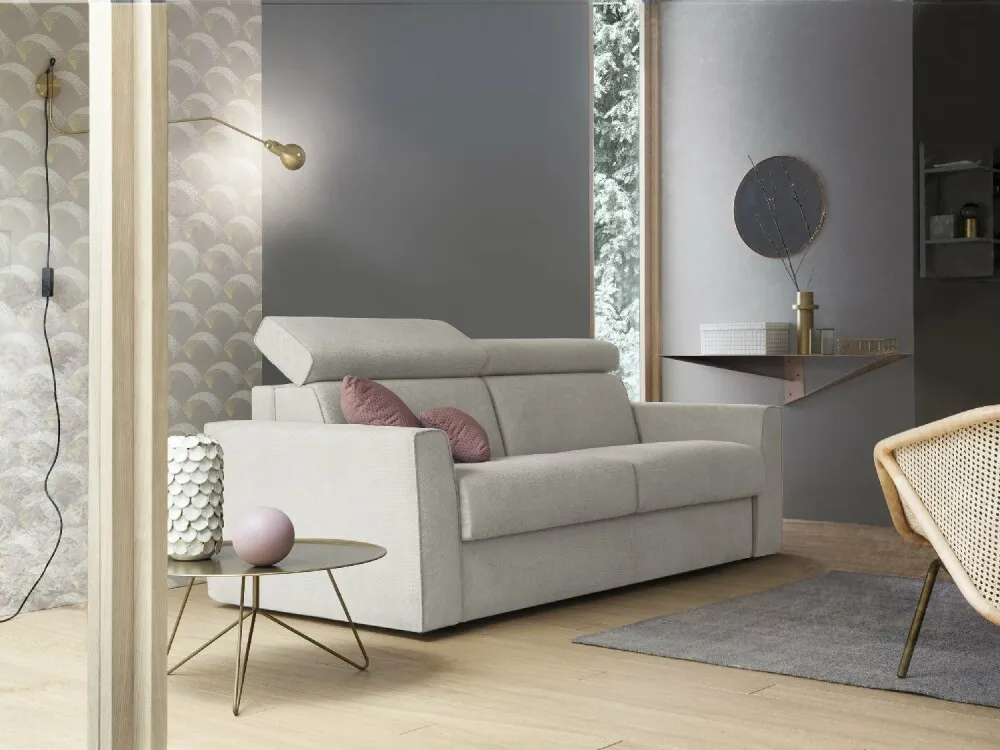
5. How to separate the dining area from the relaxation area without putting up barriers
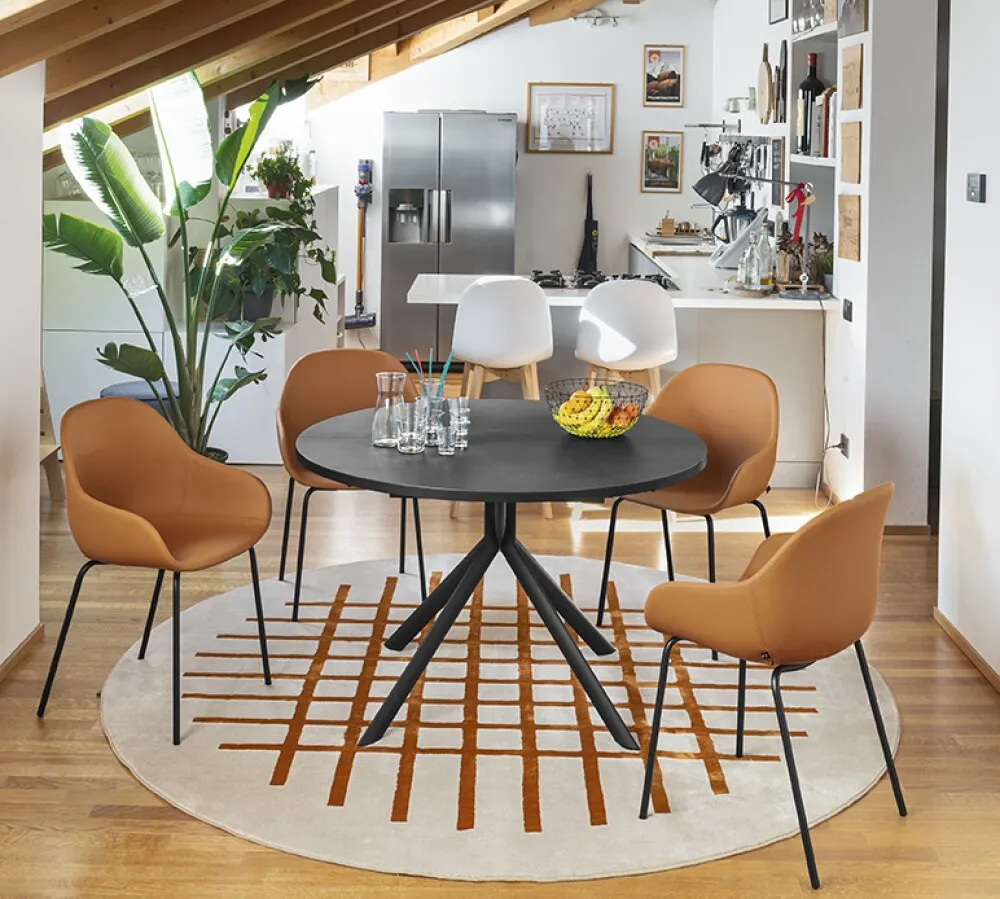
When a table and a sofa share the same room, there’s no need to draw a clear dividing line: often, it’s enough to visually distinguish the two functions. A rug beneath the sofa helps to ‘define’ the relaxation area, whilst a pendant light above the table makes the dining area more recognisable. A console table behind the sofa or a low sideboard can also serve as subtle dividers, helping to create order without closing off the space.
6. Round, rectangular or extendable table: which one should you choose to place next to the sofa?
The shape of the table also has a significant impact on the balance of the living room. A round table is ideal in small spaces or when you want to keep the walkways clear. A rectangular table works well in long, linear living rooms, as it follows the shape of the room. An extendable table, on the other hand, is perfect for multifunctional open-plan spaces: it takes up just the right amount of space on a day-to-day basis, but adapts easily when guests arrive.
7. Don’t underestimate the power of colour!
One final tip: don’t underestimate the importance of colour.
Layout is crucial, but aesthetics matter too. To create a truly harmonious living room, the table and sofa should also complement each other in terms of colour. The most practical advice is to stick to no more than 3 main colours: a dominant colour to form the basis of the room, a secondary colour to add depth, and a third accent colour to add character.
The 60-30-10 rule can help: 60% dominant colour for walls and large surfaces, 30% for a key piece such as a sofa or table, and 10% for details and accessories. In small spaces, light and neutral shades work very well, perhaps enlivened by a single bolder accent; in larger rooms, you can be more daring, provided there is a unifying theme. This ensures the overall look is polished, welcoming and never haphazard.
That’s all for now!
We’ve shown you our best-selling models and brands, but our catalogue features a wide range of top-of-the-range options and, above all, a team of expert advisors who are always on hand to help you make the right choice – free of charge and with no obligation.
Contact us for a personalised quote or simply for friendly advice!
Alternatively, browse our blog and stay up to date with the current trendsetters:
- Modern Sofas: How to Choose and the 5 Best-Selling Models
- Extendable Console Tables: Top 3 Made in Italy to Revolutionise Your Home
- The Best-Selling Tables of 2025 and the 4 Most Reliable Brands
- Complete Guide: How to Choose the Perfect Connubia Table for Your Home
See you soon!
Your Vieffetrade Team